
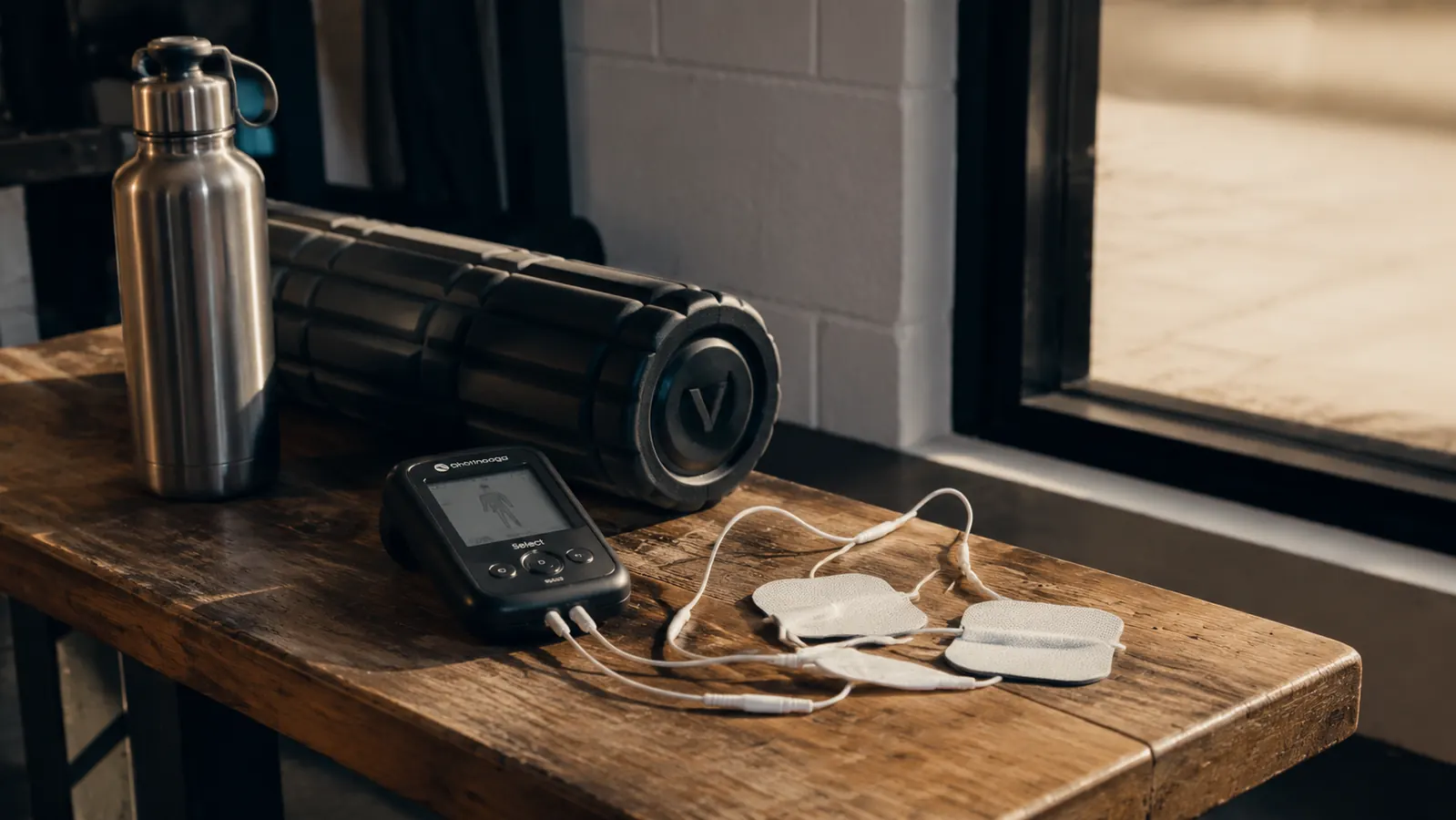
Eight weeks ago, my left quad was talking to me after a heavy squat session and I was tired of the same answer: rest, ice, maybe ibuprofen. I coach recovery for a living, and I kept recommending TENS therapy to clients without having tested one myself long enough to say anything useful. So I ordered the TENS 7000, clipped it to my waistband, and used it every single day for two months straight. What I found is probably not what the marketing copy told you.
The TENS 7000 is the bestselling consumer TENS unit on Amazon, rated 4.6 stars across more than 106,000 reviews. At that price point, the skeptic in me expected a gimmick. The coach in me needed actual data. Here is everything I learned from eight weeks of daily sessions on quads, calves, lower back, and upper traps.
The Quick Verdict
A genuinely capable TENS unit that earns its bestseller badge -- best for gym-goers and desk workers who want reliable soreness relief without learning a complicated device.
Amazon Check Today's Price →If your muscles are still sore two days after training, this is the tool most coaches start with.
The TENS 7000 has 106,000+ Amazon reviews and a price tag that makes it a no-brainer first TENS unit. Check today's price before you keep reading.
Amazon Check Today's Price on Amazon →How I Used It for 8 Weeks
My testing protocol was straightforward. I run three strength sessions a week (squats, deadlifts, overhead press) and one longer run of 8 to 10 miles on Saturdays. I used the TENS 7000 within 90 minutes of every workout on whatever muscle group was most fatigued. On rest days I ran a 20-minute lower-back session first thing in the morning because I sit at a desk for client calls and that is where tension builds fastest for me.
I tracked two things in a simple notebook: perceived soreness on a 1-to-10 scale before the session and again 30 minutes after, and whether I felt ready to train the same muscle group 48 hours later. I am not a clinical researcher. These are practical observations from a coach who actually cares whether a tool is worth putting in a client's hands.
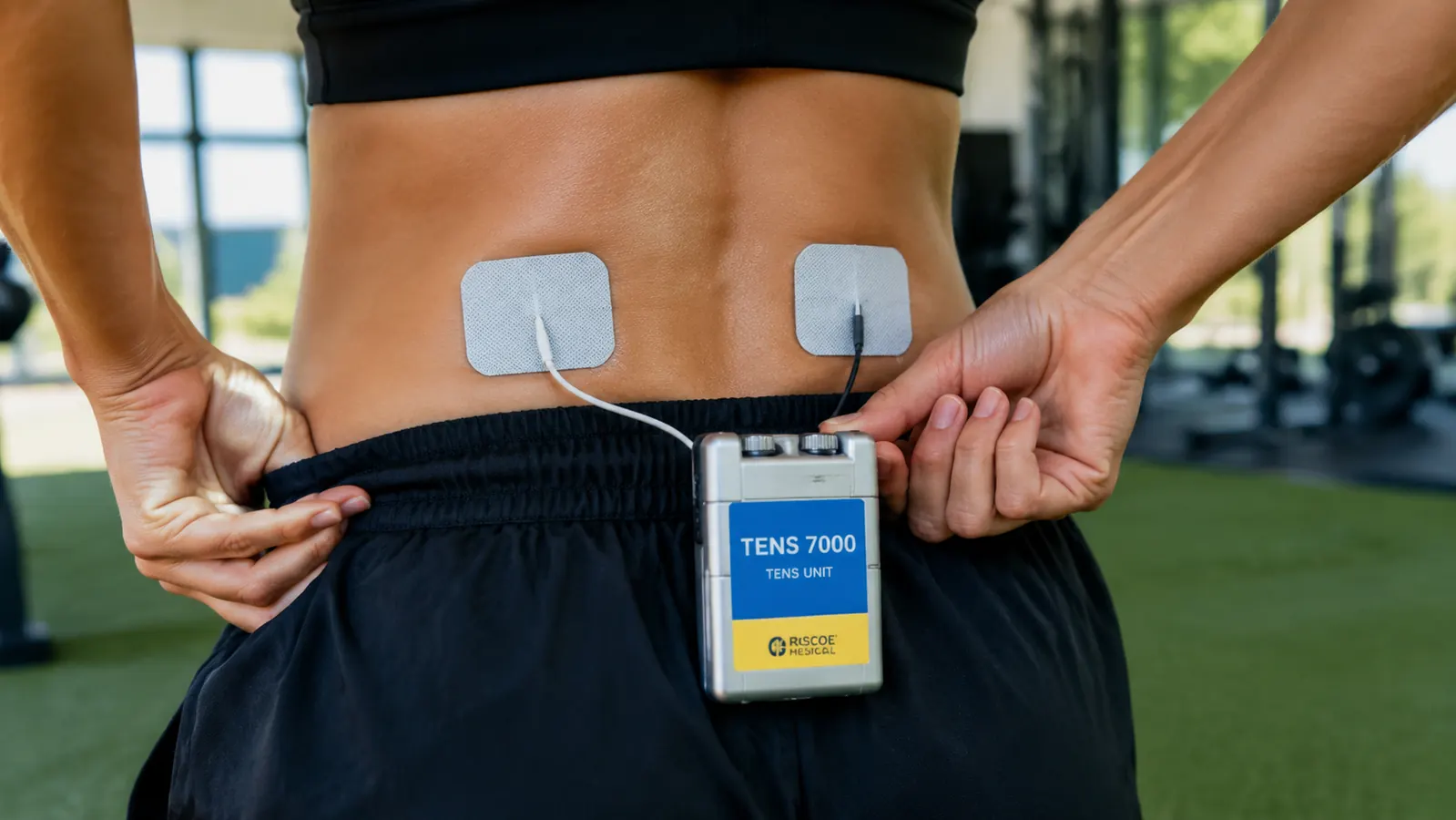
Setup took about four minutes the first time. The included electrode pads stuck well to skin, the cable connectors clicked in without fuss, and the device powered on immediately. By session three I had it clipped and running in under 90 seconds.
What the TENS 7000 Actually Does Well
The most consistent result I tracked was what I started calling the 'first 15 minutes' effect. Every single session, by minute 12 to 15, the muscle I was working on felt noticeably quieter. Not numb, not tingly in a weird way -- just less loud. The TENS signal appears to interrupt the soreness feedback loop long enough for the surrounding muscle tissue to relax. This is the gate control theory of pain in practice, and the TENS 7000 delivers it reliably.
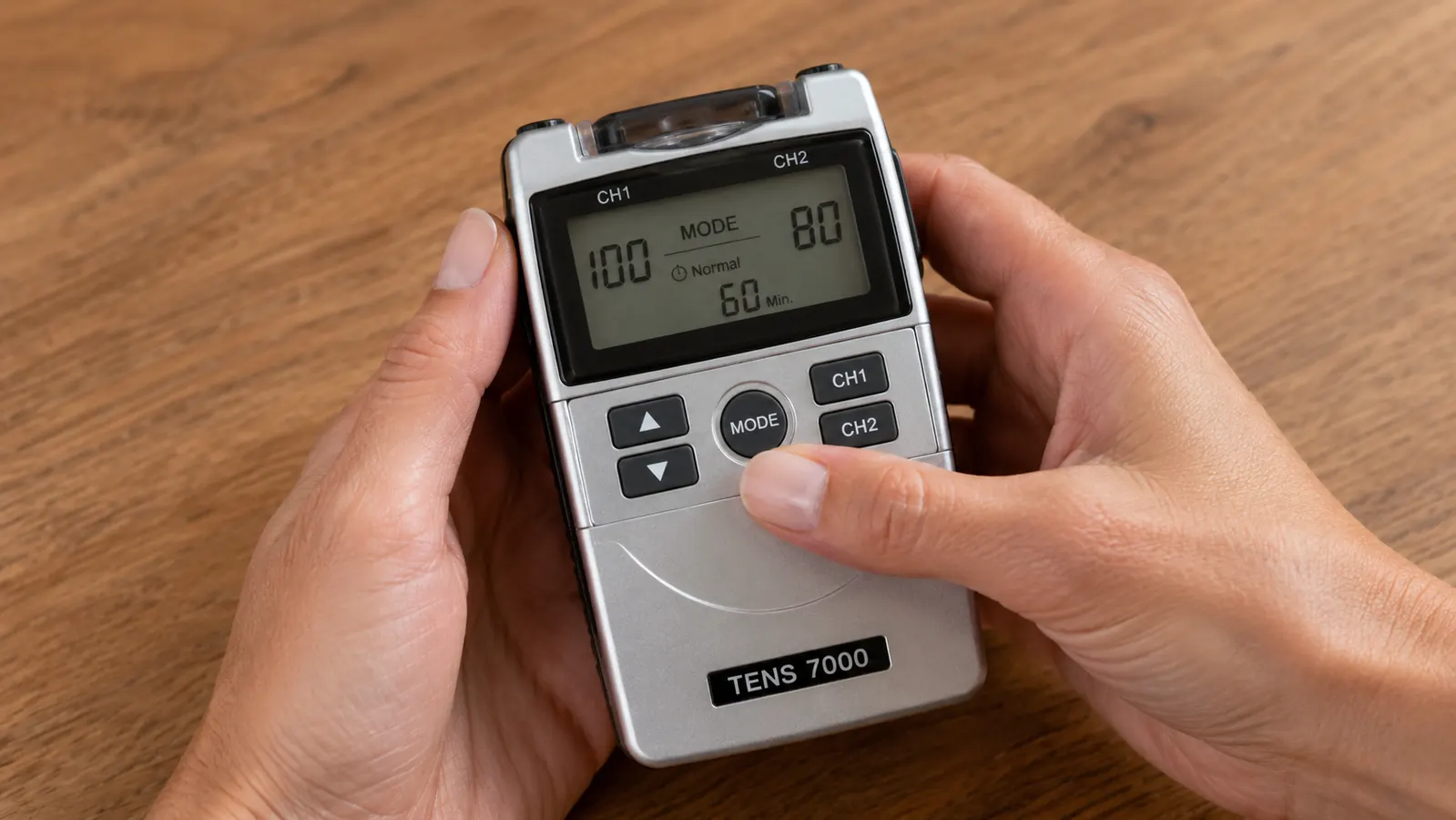
The 10 programmable intensity levels gave me meaningful range. I ran level 4 or 5 on upper traps where the skin is sensitive. I worked up to 7 or 8 on quads and calves where I wanted more signal. The digital display is large enough to read without glasses, which matters when you are operating it at arm's length with pads on your back.
The six pre-set modes (Normal, Burst, Modulation, SD1, SD2, SD3) sound complicated on paper. In practice I used Normal and Burst for about 80 percent of my sessions. Normal felt best for general soreness. Burst worked better on the knottier spots in my upper traps. The other modes are there if you want to experiment, but you will not need them to get value out of this device.
By minute 12 of every session, the muscle felt noticeably quieter. Not numb -- just less loud. Eight weeks in, that is still true.
The Ingredient Deep Dive: What TENS Actually Is
TENS stands for Transcutaneous Electrical Nerve Stimulation. The device sends low-voltage electrical current through the skin via adhesive electrode pads. That current stimulates sensory nerve fibers, which competes with and overrides pain signals traveling toward the brain. The result is a reduction in how much soreness you feel, which allows your muscles to stay more relaxed during the recovery window.
This is not the same as electrical muscle stimulation (EMS), which actually contracts muscle fibers. TENS works on the nervous system, not the muscle itself. What that means for recovery: TENS does not speed up tissue repair directly. What it does is reduce the protective tension and guarding that your nervous system adds on top of actual muscle damage. Less guarding means better blood flow to the area, which does support recovery. The distinction matters so you go in with realistic expectations.
The TENS 7000 outputs up to 100mA at frequencies between 2 and 150 Hz. That is a wide enough range to cover both the low-frequency settings associated with endorphin release (around 2 to 10 Hz) and the higher-frequency settings (80 to 150 Hz) better suited for blocking acute soreness signals. Most consumer units cap out at lower mA. The 100mA ceiling on this device is why experienced users prefer it over the cheaper options.
Performance Over Time: Weeks 1 Through 8
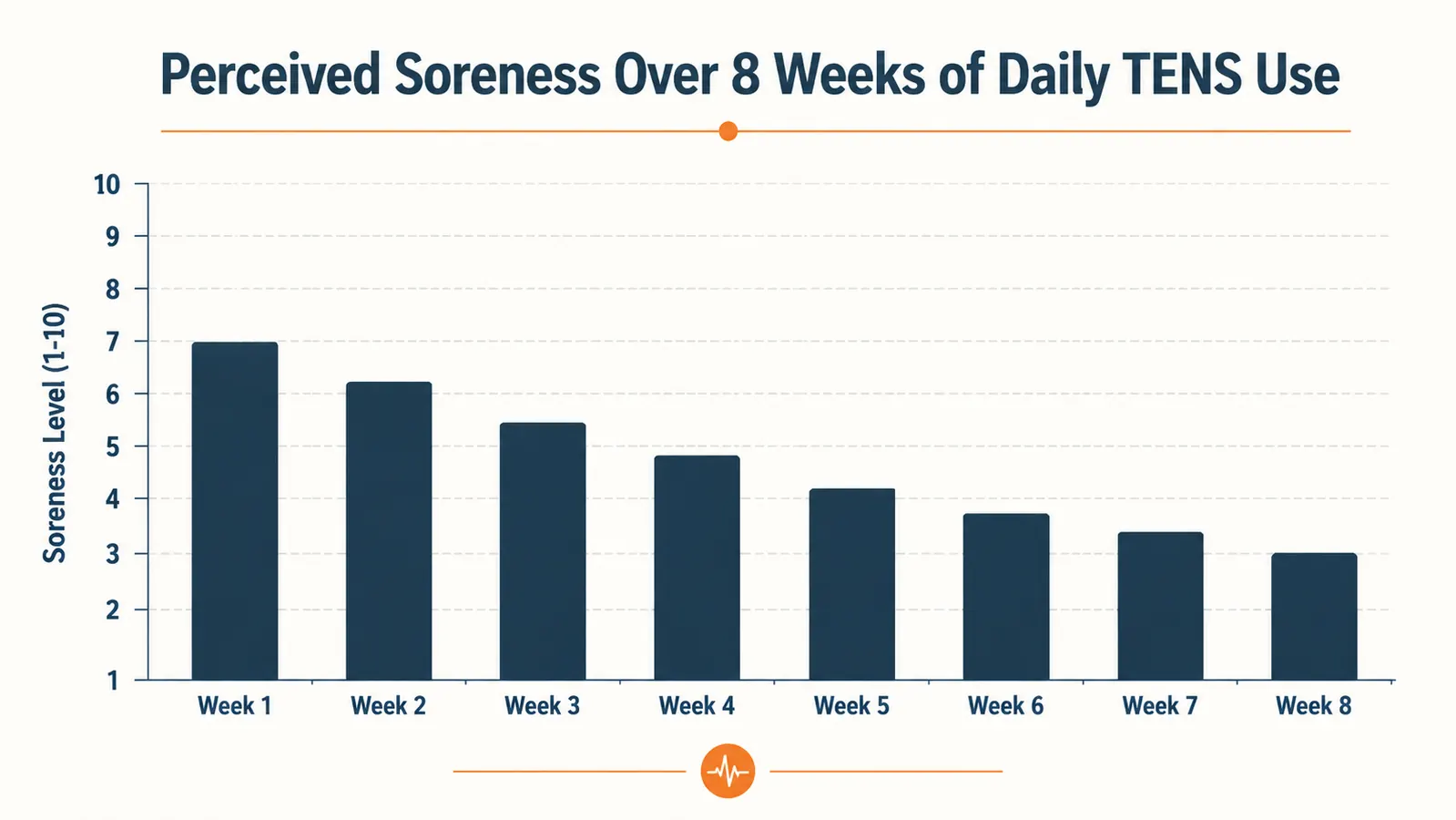
Weeks one and two were the learning curve. I was figuring out pad placement, intensity preferences, and which modes I liked. My average pre-session soreness score was 6.8 out of 10. Post-session average dropped to 4.1. Noticeable, but I was not sure how much was the device and how much was just sitting still for 20 minutes.
By weeks three and four, I had found my placements and settings. Pre-session average held around 6.2 and post-session dropped to 3.3. I also noticed I was hitting my 48-hour ready-to-train benchmark more consistently. In weeks five through eight, pre-session soreness was tracking lower to begin with -- averaging around 5.1 -- which I attribute partly to the cumulative training adaptation and partly to actually managing soreness consistently instead of just waiting it out.
The one disappointment over eight weeks: the included electrode pads started losing stick around week five. They were still usable but I had to clean my skin more carefully before each session. I ordered a replacement set of pads (compatible third-party pads work fine and cost about four dollars for a pack of 16) and the issue resolved. Budget for replacement pads when you buy this device.

What I Wish Were Different
The belt clip is functional but cheap. After about four weeks of daily use it developed a slight wobble where it connects to the unit. Not a deal-breaker, but it is the one part of this device that feels like it was built to a price. If you are moving around while wearing it -- walking between stretches or doing light mobility work -- the clip shifts more than I would like.
The lead wires that connect the device to the electrode pads are also on the short side. At 24 inches each, they work fine for back and leg placements but become awkward if you want to use the device while standing or doing anything beyond sitting and relaxing. For a stationary recovery session this is not a problem. Just know that the TENS 7000 works best when you are sitting or lying down.
The manual reads like it was written for a different device. Mode descriptions are vague, recommended intensity ranges are almost nonexistent, and there is nothing in the included materials about placement for specific muscle groups. You will get better results faster if you spend 10 minutes watching a YouTube video on TENS pad placement before your first session. The device itself is well-made; the documentation does not match it.
What I Liked
- Reliable soreness relief within 15 minutes of starting a session
- 100mA output ceiling is higher than most consumer units at this price
- Large digital display is readable without squinting
- 10 intensity levels give meaningful range across different muscle groups
- 106,000+ reviews means the accessory ecosystem (replacement pads, lead wires) is wide and cheap
- Battery life lasted me 8 to 10 sessions per pair of AAA batteries
Where It Falls Short
- Included electrode pads lose adhesion after 4 to 5 weeks of daily use
- Belt clip feels flimsy and develops wobble with regular use
- Lead wires are short enough to limit positioning options
- Manual is vague; expect to find your own placement guidance online
- No rechargeable battery -- requires AAA batteries (minor but adds up
Who This Is For
The TENS 7000 is the right tool for gym-goers and runners who train 3 to 5 days a week and consistently feel muscle soreness that lingers into the next session. It is also excellent for desk workers who accumulate tension in the lower back, neck, and upper traps through the work week. If you want something that turns down the volume on soreness so you can sleep better, sit more comfortably, and show up to your next workout without the residual grip from the last one -- this device does that reliably. If you are curious about expanding your TENS knowledge, check out my breakdown of 10 ways a TENS unit can speed up muscle recovery between workouts.
Who Should Skip It
If you are looking for actual muscle stimulation to improve strength or accelerate fiber repair, the TENS 7000 is the wrong category entirely -- you want an EMS device, not a TENS unit. If you need wireless pads, hands-free operation while moving through a full workout, or clinical-grade output for chronic nerve pain, look at options in the premium range. If you are comparing this to a Compex, read my detailed TENS 7000 vs Compex comparison before deciding -- they serve different goals. And if you have a pacemaker, epilepsy, or are pregnant, consult your doctor before using any TENS device.
Eight weeks later, the TENS 7000 is still the first thing I reach for after a heavy training day.
At this price point with over 100,000 reviews backing it up, the TENS 7000 is the easiest recommendation I make to clients who want better recovery without a complicated protocol. Check today's price and see if it fits your budget.
Amazon Check Today's Price on Amazon →