

Six months ago I tossed a Kieba lacrosse ball into my gym bag mostly on a whim. I had a nagging knot in my left upper trap that had been there for most of the winter, and I figured a dense rubber ball was worth a try before I booked another massage appointment. That knot is gone now. The ball is still in my bag. I use it every morning before my first workout and most evenings before bed, and I have learned a few things along the way that are worth sharing with anyone who is thinking about picking one up.
The Kieba massage lacrosse ball (ASIN B017V7UKW2) is a firm rubber ball sold primarily for myofascial release and trigger point therapy. It is about the same size and weight as a regulation lacrosse ball, has a slightly textured surface, and costs less than a cup of coffee. I have now used it on my traps, lats, glutes, IT band area, thoracic spine, and the soles of my feet after long runs. If you want the quick answer: yes, it holds up, and yes, it is worth keeping around.
The Quick Verdict
A dense, durable little tool that consistently delivers targeted pressure on stubborn knots. Not magic, but when you use it consistently it genuinely helps.
Amazon Check Today's Price →Tired of foam rolling and still feeling that same knot the next morning?
A lacrosse ball delivers concentrated pressure that a wide foam roller simply cannot match. The Kieba ball has a 4.7-star rating across nearly 25,000 reviews. Check the current price below before it ticks up.
Amazon Check Today's Price on Amazon →How I Have Used It Over Six Months
My routine started simple: ten minutes each morning, ball against the wall, working up and down my right thoracic spine. I had been hunching over a laptop for about two years coaching online, and my mid-back had started to feel like a clenched fist. The lacrosse ball was the first thing that got into those spots without me having to lie on the floor and wrestle with a 36-inch foam roller at 6 a.m.
By month two I was using it on my glutes and piriformis before every lower-body session. By month three it had become a plantar fascia tool after my long Saturday runs. Month four brought it into my warmup for overhead pressing days, rolling along my lats and the back of my shoulder capsule. By month six, the ball lives on my nightstand rather than in my bag, because that is where I reach for it most.
I want to be straightforward here: a lacrosse ball is a tool for temporary relief and tissue preparation. I am not a physical therapist, and if you have an actual injury you should see one. What I can say is that consistent, daily use helped me manage recurring muscle tightness in a way that foam rolling alone had not, mainly because of how specifically it targets small areas.
Build Quality and Durability After Six Months
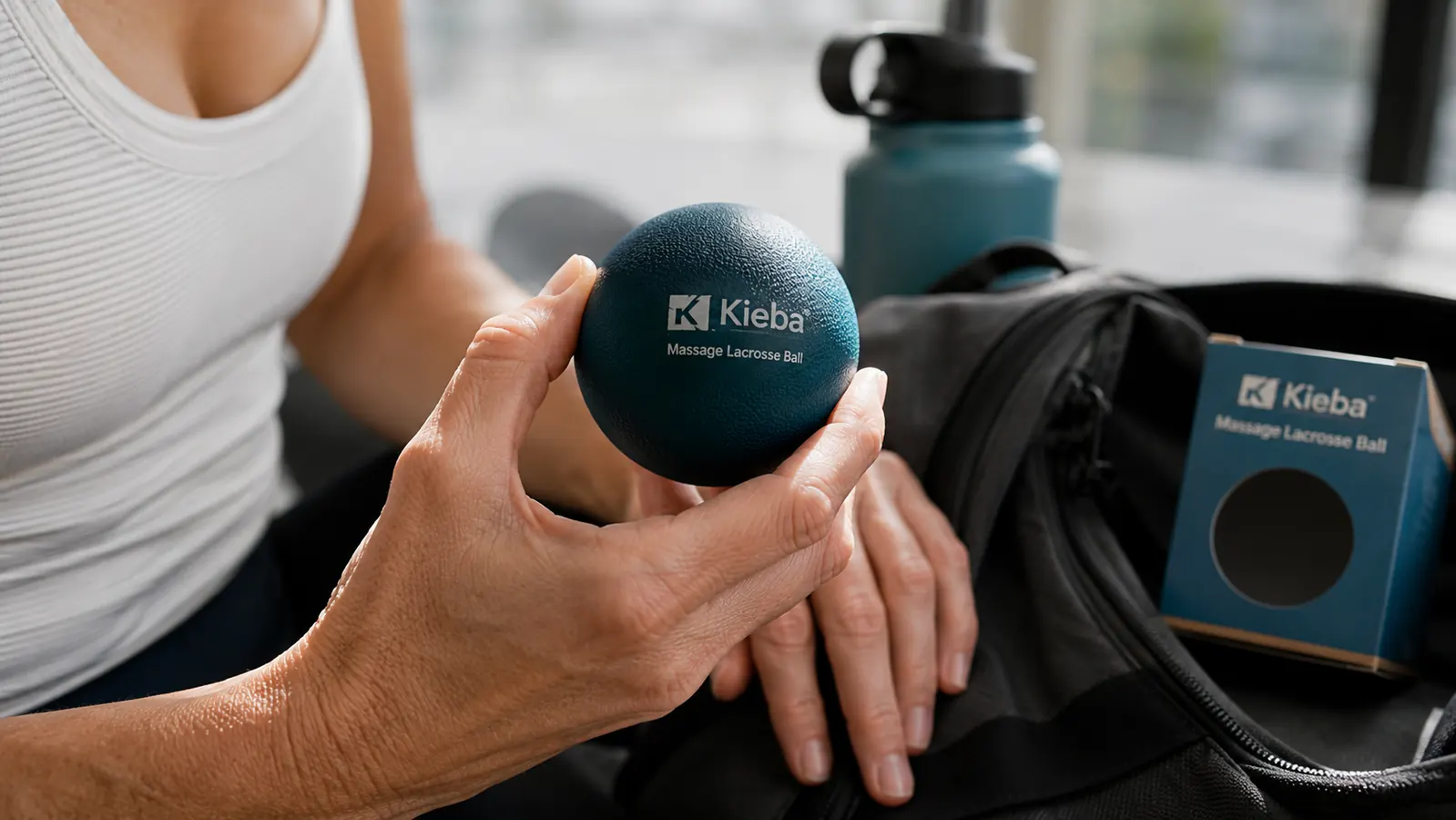
The Kieba ball is solid rubber all the way through. No seam I can feel, no squish, no give. After six months of daily use it looks almost exactly the same as it did out of the package. There is a faint scuff mark on one side from where I dropped it on concrete once, and that is the only visible wear. The surface texture, a slight pebbled grip, has not smoothed out or degraded.
I have seen people online asking whether lacrosse balls go flat or lose their firmness over time. This one has not. I pressed it against the wall this morning with the same body weight I used on day one, and it feels identical. If anything, knowing it will not degrade is the best thing I can say about the build. Compare that to lacrosse balls I have bought at sporting goods stores, which sometimes have seams that you can feel when you roll over them. The Kieba has no noticeable seam in the contact area.
One thing to know: this ball is quite firm. If you have never used a lacrosse ball before, your first session pressing into your piriformis against a wall is going to feel intense. That is not a flaw. It is how the tool works. But if you have a very low pain tolerance or are coming off a soft-tissue injury, start with very light pressure and work up gradually over a few weeks.
Where It Actually Delivered Results
Upper trapezius and base of skull: this is where I noticed the most consistent relief. Placing the ball between the upper trap and a wall, then slowly dropping my chin to my chest and letting my body weight do the work, I felt knots release in a way that neither static stretching nor foam rolling had managed. After about three weeks of daily morning sessions, the persistent stiffness I had been waking up with on the right side of my neck was noticeably less frequent.
Glutes and piriformis: sitting at a desk for six or seven hours and then doing heavy squats is a reliable recipe for a tight piriformis. Sitting on the lacrosse ball on the floor, shifting weight until I found a tender spot, and holding for thirty to ninety seconds became my standard pre-squat warmup. My right hip started feeling more open during the first few inches of my squat descent by month two.
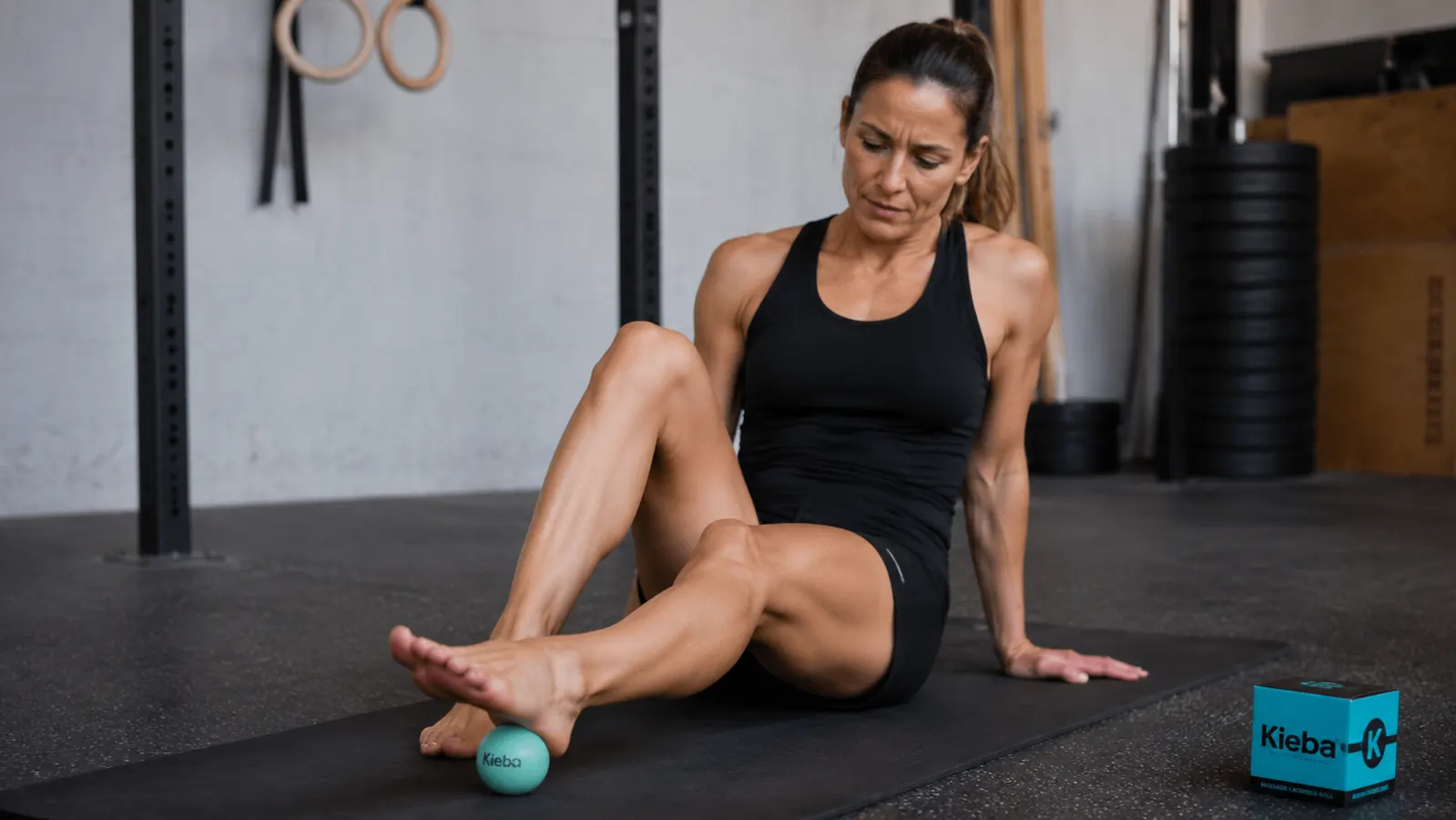
Plantar fascia: after runs longer than eight miles, rolling the ball under my foot while seated has become non-negotiable. I do two to three minutes per foot. I cannot claim it cures plantar fasciitis, but it has kept me from developing the morning heel pain that plagued me during a training block two years ago when I skipped any foot work entirely.
Thoracic spine: this is the area where a lacrosse ball on the floor outperforms a ball against the wall. Lying on your back with the ball on one side of your spine (never directly on the vertebrae) and letting gravity do the work gets into the mid-back in a way a foam roller cannot replicate because the foam roller distributes pressure across a wider surface.
The first time I held the ball on my piriformis for a full sixty seconds I thought I had discovered some kind of secret. I had not. I had just finally applied enough pressure to the right spot long enough for it to matter.
Where It Falls Short
The lacrosse ball is not a recovery shortcut. I want to be clear about that because some product listings make it sound like you roll around for five minutes and your soreness disappears. That is not how it works. What it does is apply sustained pressure to specific tissue that helps reduce localized tension when used consistently over time. You still need sleep, hydration, and progressive training to actually recover.
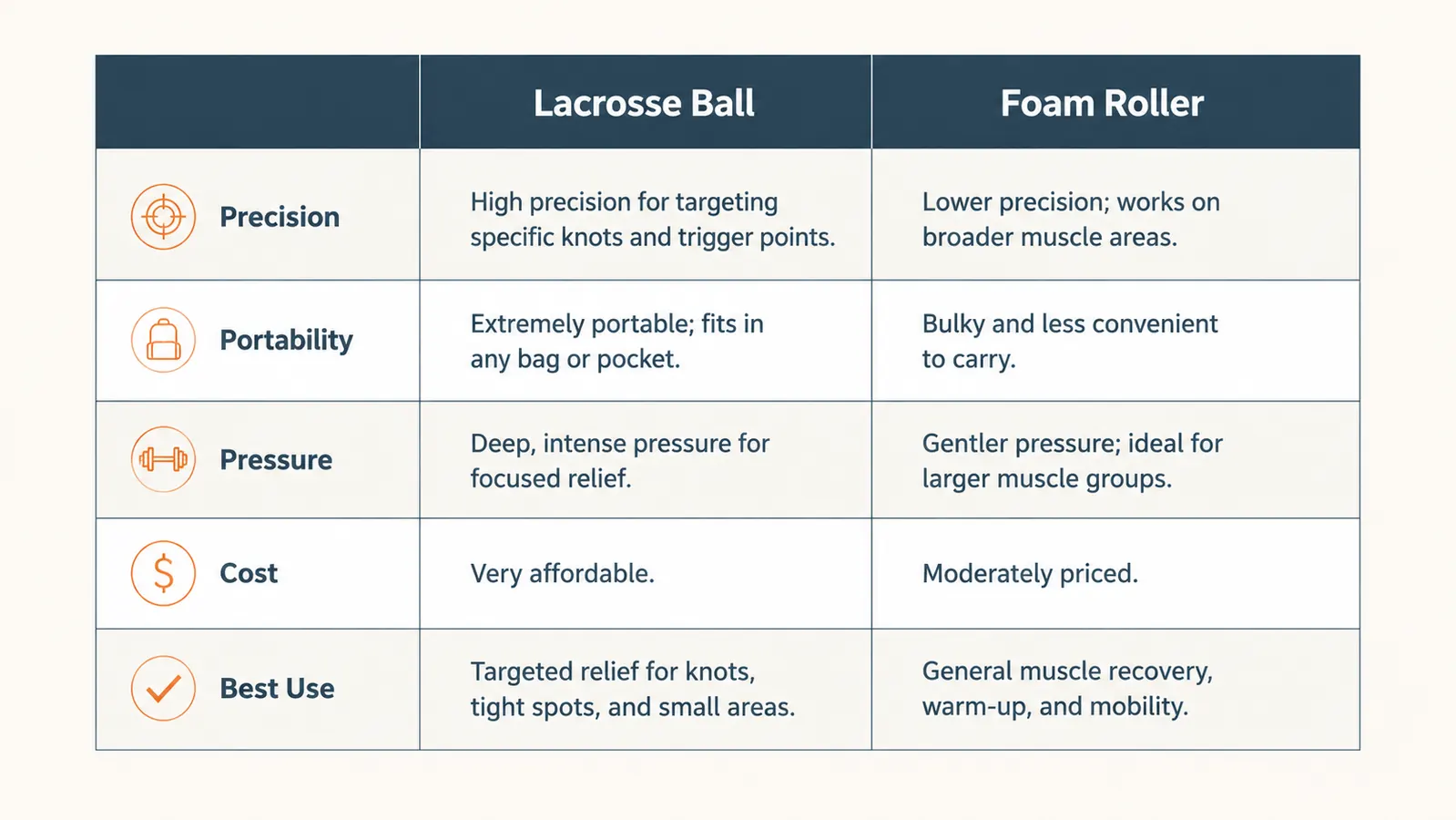
The ball also has limits on larger muscle groups. For something like widespread quad soreness after a hard leg session, the Kieba ball is too small to cover the area efficiently. That is where a foam roller or a muscle roller stick is a better tool. I use the lacrosse ball for targeted spots and something wider for general flushing. They are not competitors, they do different jobs.
One minor complaint: the ball has no carrying case. It is just a ball. It sits loose in my gym bag and has ended up wedged under my shoe twice. Not a big deal, but if you are buying two (Kieba sells pairs), tossing them in a mesh pouch would be useful.
What I Liked
- Dense, consistent firmness that has not degraded after six months of daily use
- No seam in the contact area, rolls smoothly on curved muscle tissue
- Genuinely effective on small, stubborn trigger points that foam rollers cannot reach
- Tiny enough to keep on a nightstand, desk, or gym bag without taking up space
- Priced low enough that buying two and keeping one at work is not a stretch
Where It Falls Short
- Very firm out of the box, which can be uncomfortable for first-time users
- Too small for large-area soreness like widespread quad or hamstring DOMS
- No carrying case or storage pouch included
- You have to actually learn technique for it to work, it is not self-explanatory
Comparing It to Cheaper Lacrosse Balls
I have used standard lacrosse balls from sporting goods stores alongside the Kieba for about two months of this test period. The main difference I noticed is the seam. Sporting goods lacrosse balls are designed for sport, not rolling on muscle tissue, and they have a raised seam that you can feel when the ball rotates across your skin. It is not painful, but it breaks the smooth, consistent pressure you want when holding on a trigger point. The Kieba ball has no noticeable seam in the typical rolling contact area.
The firmness is similar between the Kieba and standard balls. If price is the only consideration and you just want to try the technique, a sporting goods ball works fine. But the Kieba costs about the same or less than what you would pay at a physical store, and the cleaner surface is a genuine quality-of-life improvement.
Who This Is For
The Kieba lacrosse ball is a good fit for gym-goers who have recurring tightness in specific spots and have found that foam rolling gives only temporary or incomplete relief. It is especially useful for people who sit for most of the workday and carry tension in their upper traps, thoracic spine, or hips. Runners with plantar issues or IT band tightness will also find it useful as a targeted addition to their recovery toolkit. If you are willing to learn two or three basic techniques and use the ball consistently for a few weeks, you will notice a real difference in how those problem areas feel. For more on which spots to target first, see the guide on 10 trigger point spots every gym-goer should target with a massage ball.
Who Should Skip It
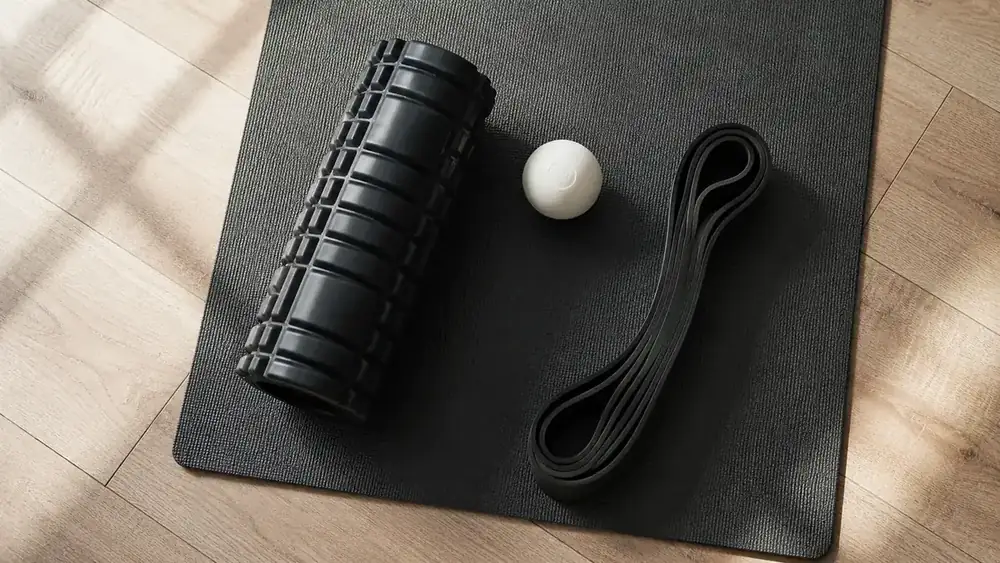
If you are dealing with an acute injury, bruised tissue, or nerve-related pain that a doctor has diagnosed, stop and see a professional before using any self-massage tool. A lacrosse ball on inflamed tissue or near a compressed nerve can make things worse. This is also not the right tool if your primary goal is loosening up large muscle groups before or after a heavy session. For wide-area coverage, a foam roller or a roller stick will serve you better. And if you tend to quit a habit within a week, the lacrosse ball might not be for you because the results are cumulative, not immediate. To understand where it fits relative to a foam roller, check out the full breakdown in the lacrosse ball vs foam roller comparison.
Six months in, this ball is still the first thing I reach for when a knot shows up.
The Kieba lacrosse ball has a 4.7-star rating from nearly 25,000 reviewers. At the current price it is one of the lowest-cost recovery tools you can add to your routine. Click below to check availability and today's price on Amazon.
Amazon Check Today's Price on Amazon →