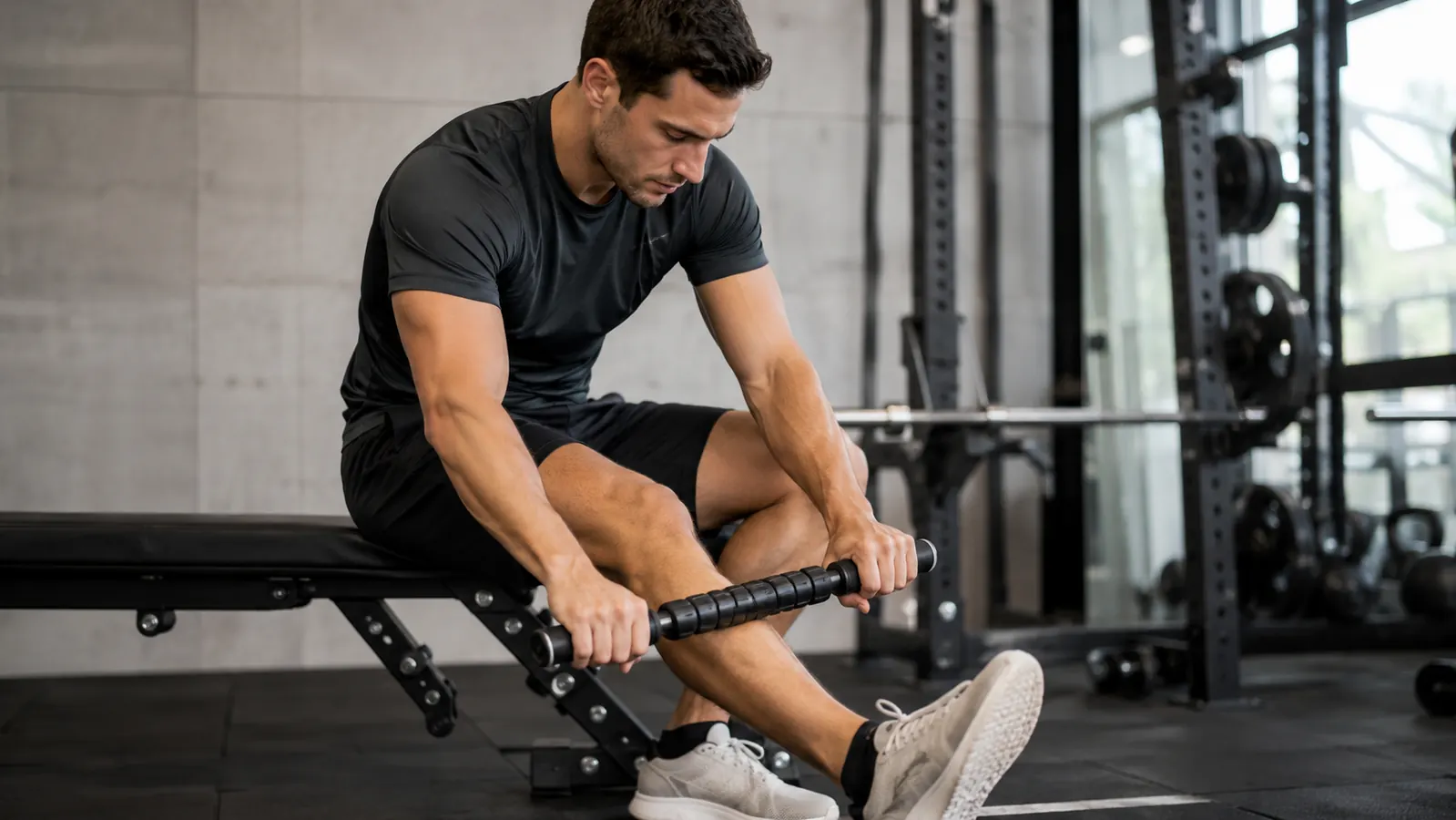
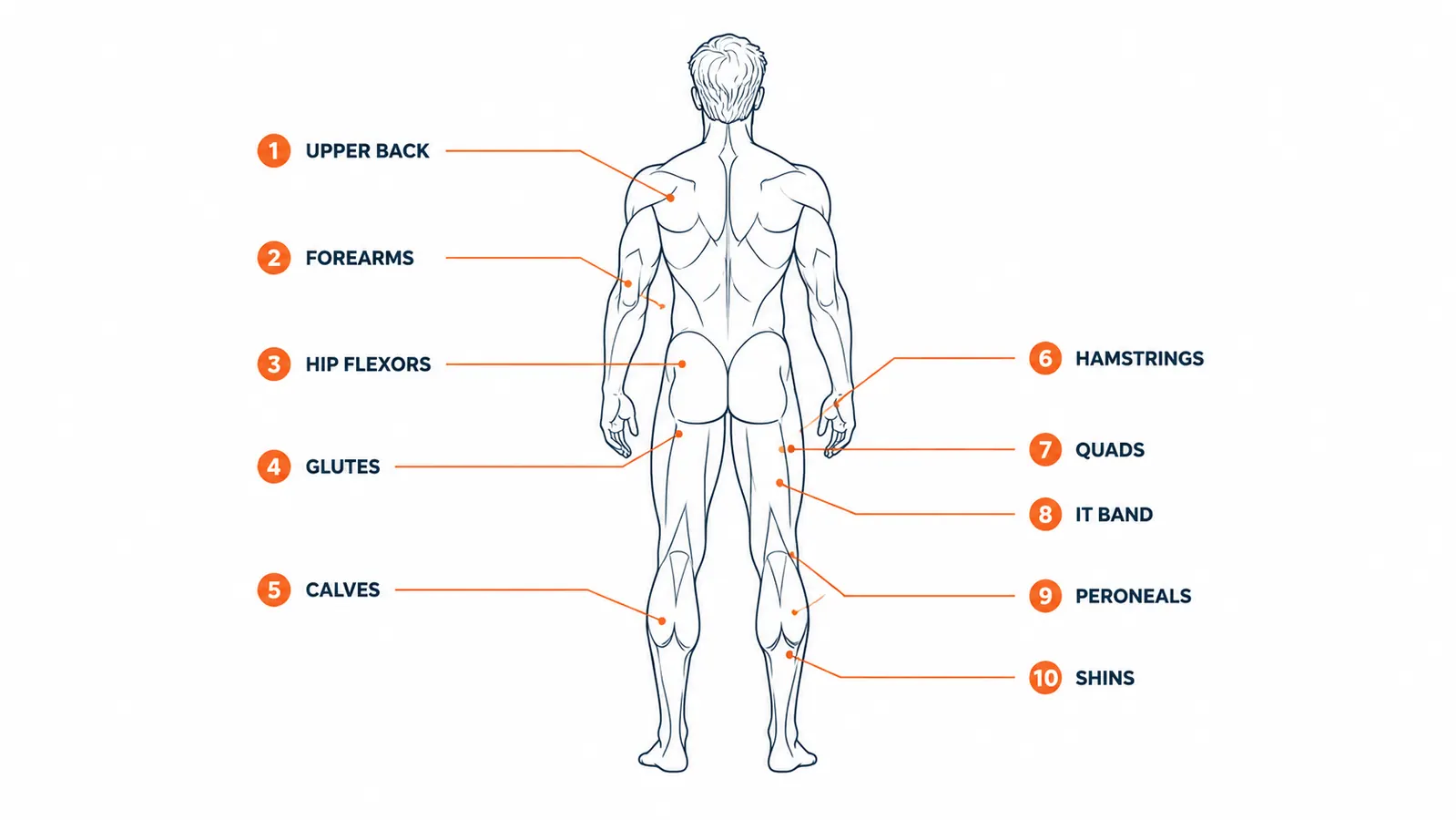
I have been coaching recovery for a long time, and one thing I see constantly is people spending five minutes rolling their quads on a foam roller and calling it done. That leaves a lot of tissue feeling tight by the next morning. A roller stick is not a replacement for a foam roller, but it reaches spots the foam roller simply cannot get to precisely. You can roll one hand at a time, adjust pressure mid-stroke, and target a two-inch band of muscle instead of a full body-part sweep. Once you know the ten spots where a stick actually shines, rolling becomes faster and you will feel the difference.
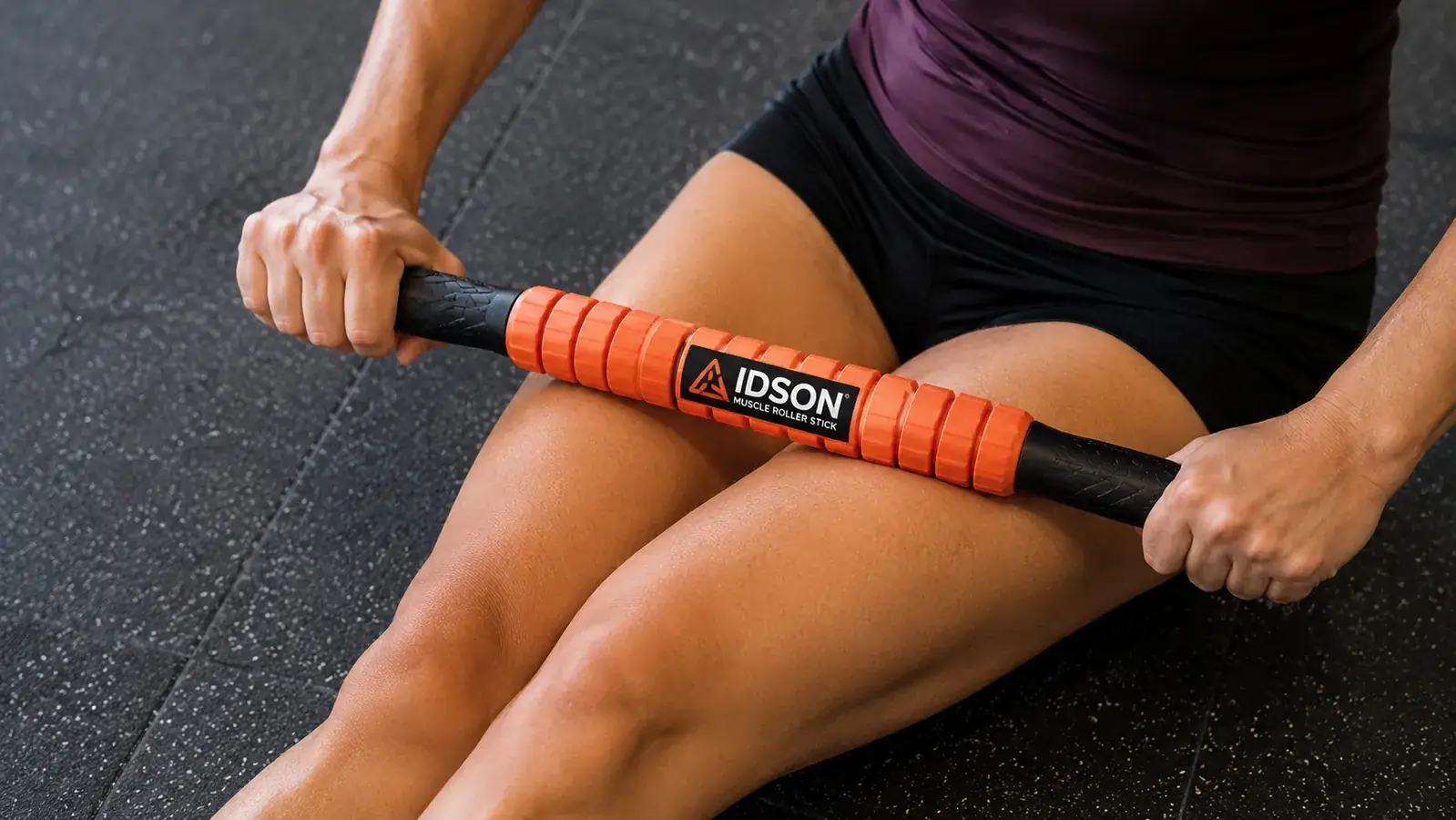
The Idson Muscle Roller Stick is the one I keep in my bag. It is affordable, holds up well with regular use, and the roller segments spin smoothly enough that you are not dragging skin along the way. I have recommended it to runners, lifters, and desk workers who sit all day and show up to training with legs that feel like concrete. If you are not already rolling these ten spots after every workout, you are leaving recovery work on the table.
Your calves are tighter than you think. The Idson roller stick is what I use to fix that.
Compact, smooth-rolling, and easy to take anywhere. Check the current price on Amazon and see why it has over 26,000 reviews.
Amazon Check Today's Price on Amazon →Calves
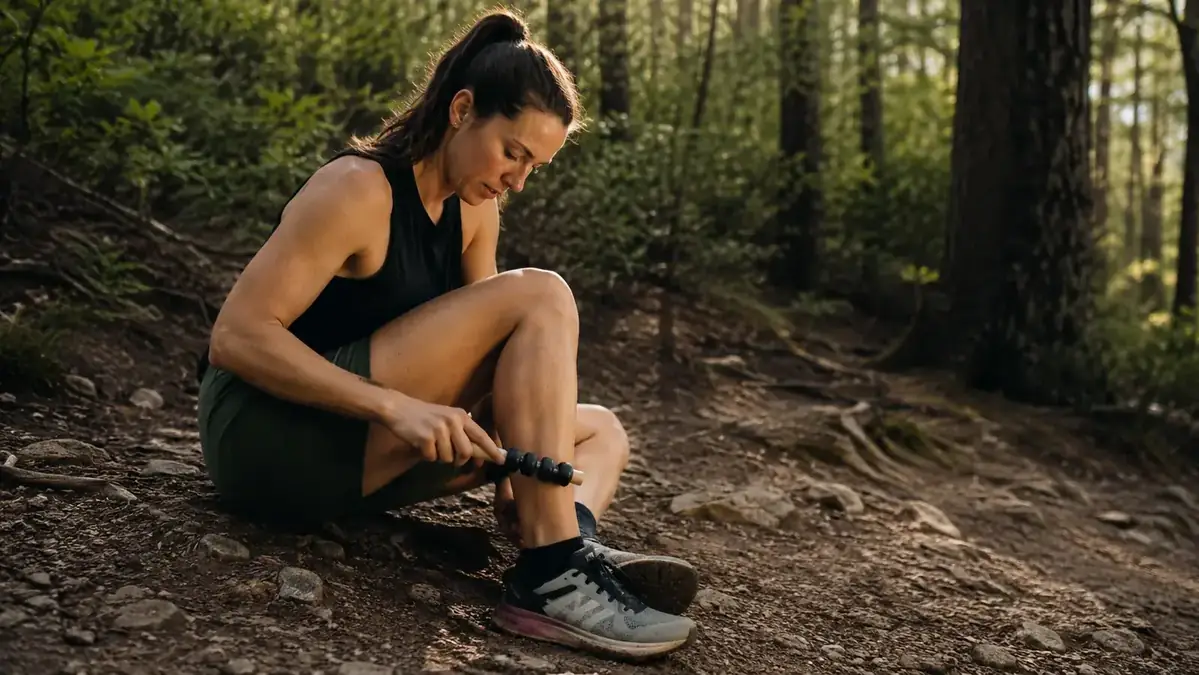
The calf complex takes a beating in anything involving running, jumping, or standing for hours. Sit on the floor or a bench, place the roller stick under your lower leg, and roll from the ankle to just below the knee with moderate pressure. Spend an extra beat on any spot that grabs your attention. Tight calves pull on the Achilles and contribute to plantar fasciitis over time, so this is not optional if you run regularly. Two to three slow passes per leg after a run or a lower-body session is enough. Do not crush the muscle, roll with enough pressure to feel it but not enough to tense up and guard against it.
Hamstrings
A foam roller under the back of your thigh tends to just slide you around unless you prop yourself up on both hands, which is awkward and exhausting. A roller stick fixes that. Sit on the edge of a chair or bench, extend one leg out, and roll from just above the knee crease up to the glute fold. Go slow because the hamstring tends to be dense and reactive. Three passes at whatever pressure you can sustain without holding your breath. This matters most after deadlifts, leg curls, or any sustained running distance above thirty minutes.
Quadriceps
You can get to the quads with a foam roller, but the stick lets you hit the outer quad and the rectus femoris (the middle strip running straight down the front of your thigh) with separated, targeted passes instead of one wide sweep. Sit in a chair, place the stick across the middle of your thigh, and roll toward your hip. Then shift slightly outward and repeat. This is especially useful after squats or cycling, when the muscle belly feels almost wooden. The quads cover a lot of territory, so take your time on each pass rather than rushing.
IT Band and Outer Thigh
The IT band itself is dense connective tissue and does not actually release the way muscle does, but the muscles that feed into it, specifically the tensor fasciae latae and the outer portion of the vastus lateralis, respond well to stick work. Roll the outer thigh from just above the knee up toward the hip pocket. This is a sensitive zone and some people have to back off the pressure significantly. If it makes you tense up, use less force. The goal is to get circulation into the area and encourage the surrounding tissue to calm down, not to hammer through it.
Shins (Tibialis Anterior)
This one gets skipped by nearly everyone and it is a mistake, especially for runners and anyone who does box jumps or jump rope. The tibialis anterior runs along the outer front of your lower leg and gets fatigued any time you are repeatedly dorsiflexing or absorbing impact. Kneel on a soft surface or sit on the floor, position the stick across the front of your lower leg below the knee, and roll in short strokes toward the ankle. Light to moderate pressure only. This is a small muscle and it will let you know quickly if you are overdoing it.
The spots most people skip, shins, peroneals, forearms, are usually the spots where they feel the most relief when they finally roll them out. Start there.
Peroneals (Outer Lower Leg)
The peroneal muscles run along the outside of the lower leg between the calf and the shin. They stabilize the ankle during lateral movement, single-leg work, and uneven terrain. If your ankles feel unstable or you tend to supinate (roll outward) when you run, tight peroneals are often part of the picture. Roll the outer edge of your lower leg from just above the ankle to just below the knee, keeping pressure moderate. This works best when you tilt your leg slightly inward so the outer surface is presented to the stick.
Upper Back (Thoracic Erectors)
A foam roller on the upper back is useful but clunky. Getting the stick across the muscles on either side of your spine, not directly on the spine itself, is something most people have never tried and find surprisingly effective. Reach both arms behind you and work the stick across the upper trapezius and the thoracic erectors from the shoulder blades upward. Desk workers and overhead-pressing lifters accumulate a lot of tension in this area. Keep the pressure moderate and never press directly onto the vertebrae. The tissue alongside the spine is what you are after.
Forearms
Anyone who lifts consistently or types at a keyboard for eight hours a day will feel this one. The forearm flexors and extensors accumulate tension that contributes to elbow pain and wrist tightness. Rest your forearm on a table with your palm down, place the stick across the fleshy part of the forearm just below the elbow, and roll in short strokes toward the wrist. Then flip your arm over and repeat on the top side. This takes about ninety seconds per arm and it makes a real difference for grip-heavy training days. Rows, pull-ups, deadlifts, and farmer carries all load these muscles hard.
Hip Flexors
This one requires a little setup. Lie face down and position the roller stick horizontally across your upper thigh near the hip crease. Support yourself on your forearms and roll in very short strokes up into the hip flexor area. Alternatively, stand and brace one hand against a wall for balance while rolling the front of the hip with the other hand. Hip flexors are often chronically shortened from sitting and then loaded hard during squats, lunges, and running. They respond well to slow, sustained pressure. Not a fast rolling motion, more like a sustained hold-and-breathe approach on the tense spots.
Glutes
You can hit the glutes with a foam roller or a lacrosse ball, but the roller stick gives you a way to work the area while standing or sitting without having to get on the floor, which matters a lot after a brutal lower-body day when getting back up is its own challenge. Reach behind you and press the stick into the belly of the glute, using a back-and-forth motion across the muscle fiber. Cover the upper glute, the middle belly, and the piriformis region (just above and slightly outside the sit bone). Tight glutes contribute to lower back stiffness and hip impingement, so this is not just a comfort measure. It is functional maintenance.
What I Would Skip
A roller stick is not the right tool for every part of the body. I would not use it directly on the lower spine, the back of the knee, the neck, or any area where you have an acute injury or bruising. Those spots need rest or professional attention, not compression. The stick also does not replace a proper warm-up before training. It is a recovery and maintenance tool, not a substitute for getting the body temperature up and blood moving before you load tissue under a barbell. Use it after your session or on rest days, not as a pre-workout shortcut.
If you have any joint pain, nerve symptoms like tingling or numbness, or a diagnosed musculoskeletal condition, check with a physical therapist before adding roller stick work to your routine. What helps most people is generally safe, but individual situations vary and this is not medical advice.
Ten spots, ten minutes. The Idson roller stick makes it easier to be consistent.
It is compact enough to toss in a gym bag, smooth enough not to drag skin, and priced so it is not a commitment. Over 26,000 Amazon reviews back it up. See today's price and decide for yourself.
Amazon Check Today's Price on Amazon →