If your cooldown is just a few minutes of static stretching, you are probably leaving the most stubborn tension completely untouched. Tight spots after training are rarely evenly distributed across a muscle. They cluster at specific trigger points, little knots where the muscle fiber has seized up and is not letting go. Stretching slides right past them. A lacrosse ball is small enough to park directly on them and apply the targeted pressure they need.
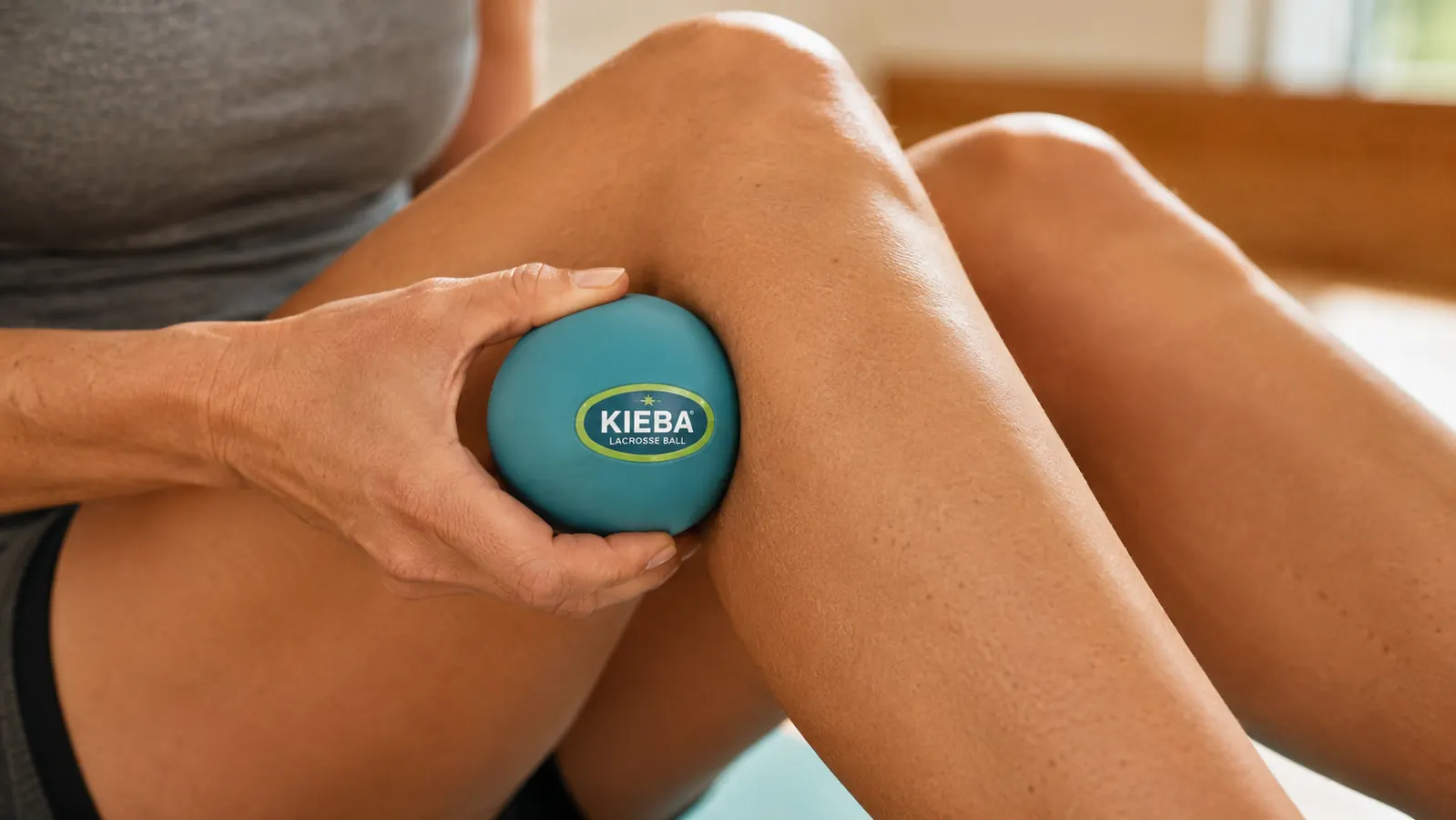
I have been recommending the Kieba lacrosse ball to clients for years because it is firm enough to do real work but not so sharp that it bruises. At 4.7 stars from more than 24,000 buyers on Amazon, it earns its reputation. The ten spots below are the ones I see cause the most trouble for lifters, runners, and people who sit too long at a desk. Work through even three or four of them consistently and you will feel the difference by your next session.
Your cooldown is missing this one tool.
The Kieba lacrosse ball is what most gym-goers wish they had bought sooner. Firm enough to release real knots, portable enough to live in your gym bag.
Amazon Check Today's Price on Amazon →Upper Trapezius (the spot where stress lives)
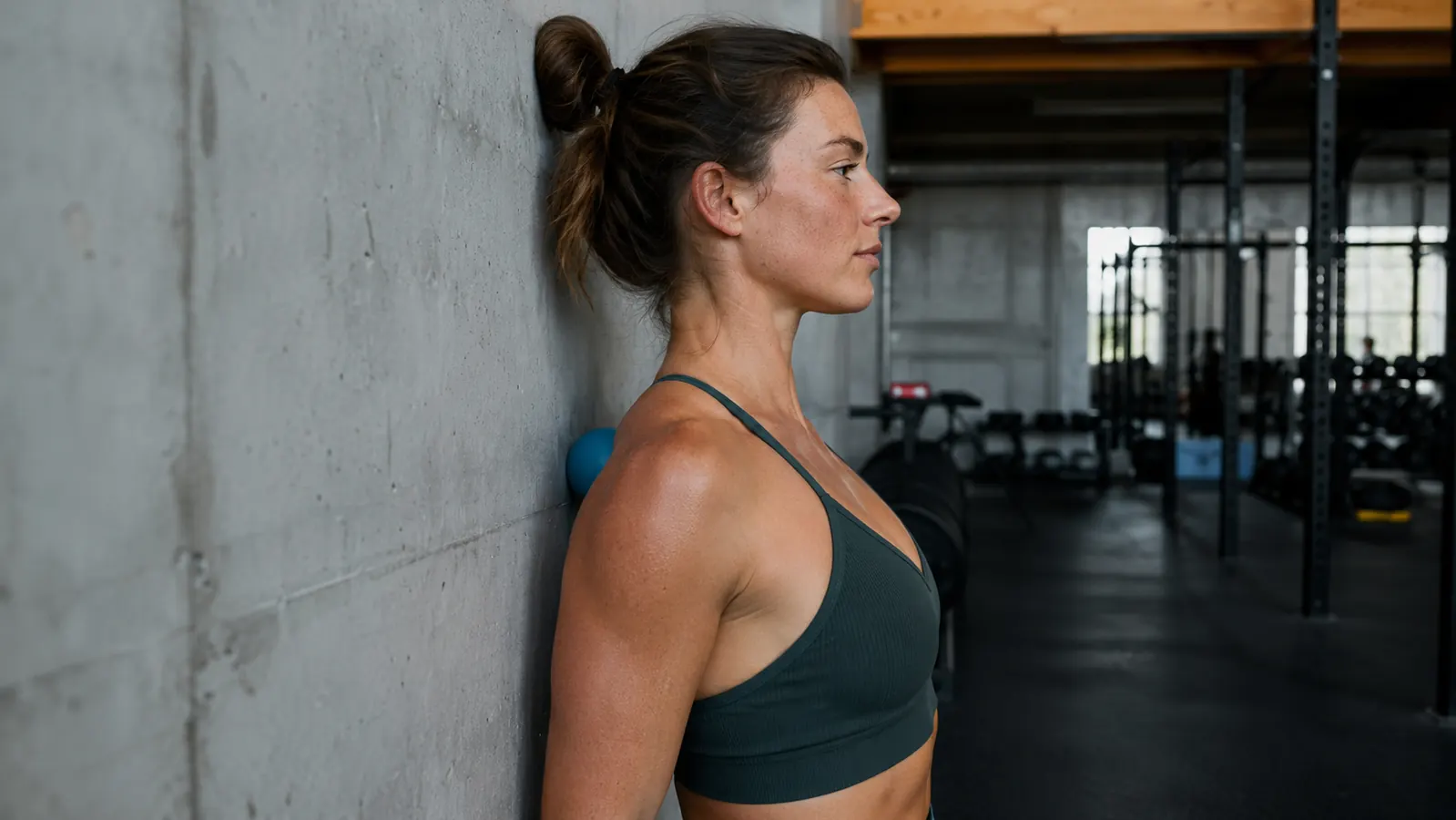
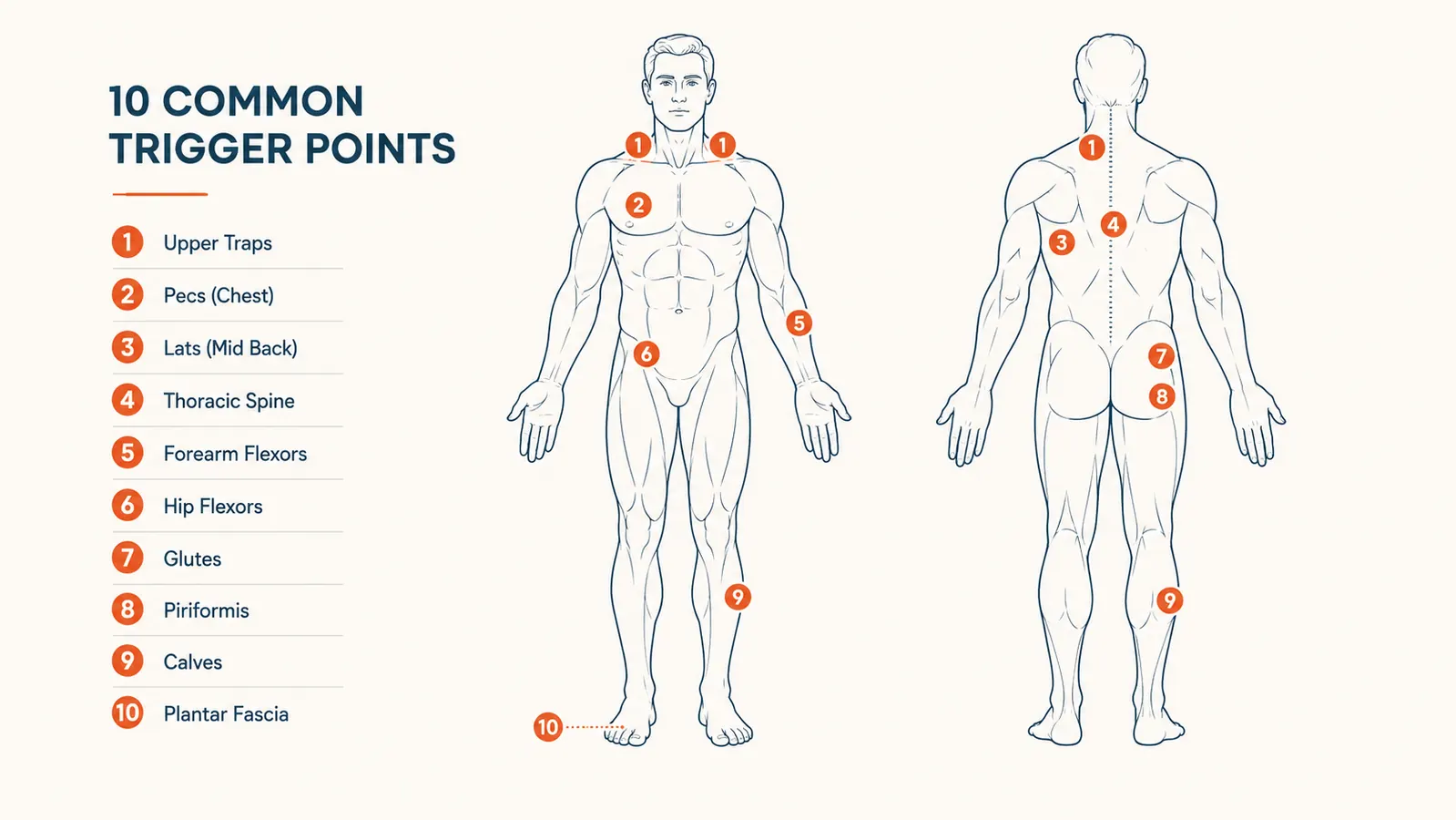
The upper traps run from the base of your skull to the top of your shoulder blade. Pull day, desk job, or just a rough week and this area locks up into a dense knot that no amount of neck rolling touches. Place the ball between your upper trap and a wall, lean in gently, and make small circles until you find the tight spot. Hold for 30 to 60 seconds. You will feel a dull ache that releases into relief. Start light. This area can be sensitive.
Thoracic Spine (mid-back stiffness from sitting or heavy lifts)
The thoracic spine is the middle section of your back, between the shoulder blades. Lifters who bench, press, or row without adequate thoracic mobility compensate with the lower back and shoulders over time. Place the ball just to one side of your spine (never directly on a vertebra), lie back on the floor, and let gravity do the work. Move inch by inch down toward your lower ribs. Two to three minutes here after pressing days makes a noticeable difference in range of motion.
Pec Minor (the hidden culprit behind rounded shoulders)
Most people stretch the pec major and stop there. The pec minor sits underneath, pulling the shoulder blade forward and down. That forward-shoulder posture that plagues desk workers and heavy benchers almost always has a tight pec minor involved. Place the ball just inside the front of your shoulder, just below the collarbone, and lean into a wall or door frame. Gently rotate your arm while holding the ball in place. Thirty seconds per side, two or three times a week. Shoulders will sit back more naturally.
Lats (tight from pull-downs, rows, and overhead carries)
A tight latissimus dorsi limits shoulder flexion and can contribute to lower back pain when it tugs on the lumbar spine. Lie on your side on the floor with the ball tucked into the lat, about halfway between your armpit and your waist. Stretch your arm overhead and relax into the pressure. Rotate slightly forward and back to find the knots. This one is subtle but it unlocks pull-up depth and overhead pressing positions quickly.
Glute Medius (the hip stabilizer nobody pays attention to)
The glute medius sits on the outer hip and is responsible for stabilizing your pelvis every time you take a step or stand on one leg. Runners who start developing knee pain are often dealing with a weak or knotted glute medius before the knee ever becomes the real issue. Sit on the floor, place the ball under the outer part of one glute, cross that ankle over the opposite knee to open the hip, and roll slowly. Find the sore spots and sit on them for 45 seconds. Both sides, every training day.
Piriformis (deep hip rotator that mimics sciatica)
The piriformis is a small but powerful muscle in the deep glute that can press on the sciatic nerve when it tightens up. The resulting ache down the leg often gets misdiagnosed as true sciatica when it is actually piriformis syndrome, a muscular issue that responds very well to direct pressure. Sit on the ball in the center of the glute, lean slightly to that side, and put your ankle on the opposite knee. Hold 60 seconds. This one tends to be tender at first. Ease into it and it will loosen within a few sessions.
Hip Flexors (chronically shortened by sitting and heavy squats)
The psoas and iliacus attach deep in the front of the hip and shorten every time you sit, squat under load, or run. A persistently tight hip flexor tugs on the lumbar spine and is one of the most common contributors to lower back tightness in gym-goers. Lie face-down and place the ball just inside the front of your hip, below the hipbone. Rest your weight on it and breathe slowly. The area releases gradually with sustained pressure. Two minutes per side is all it takes.
Calf (calves tighten faster than most people realize)
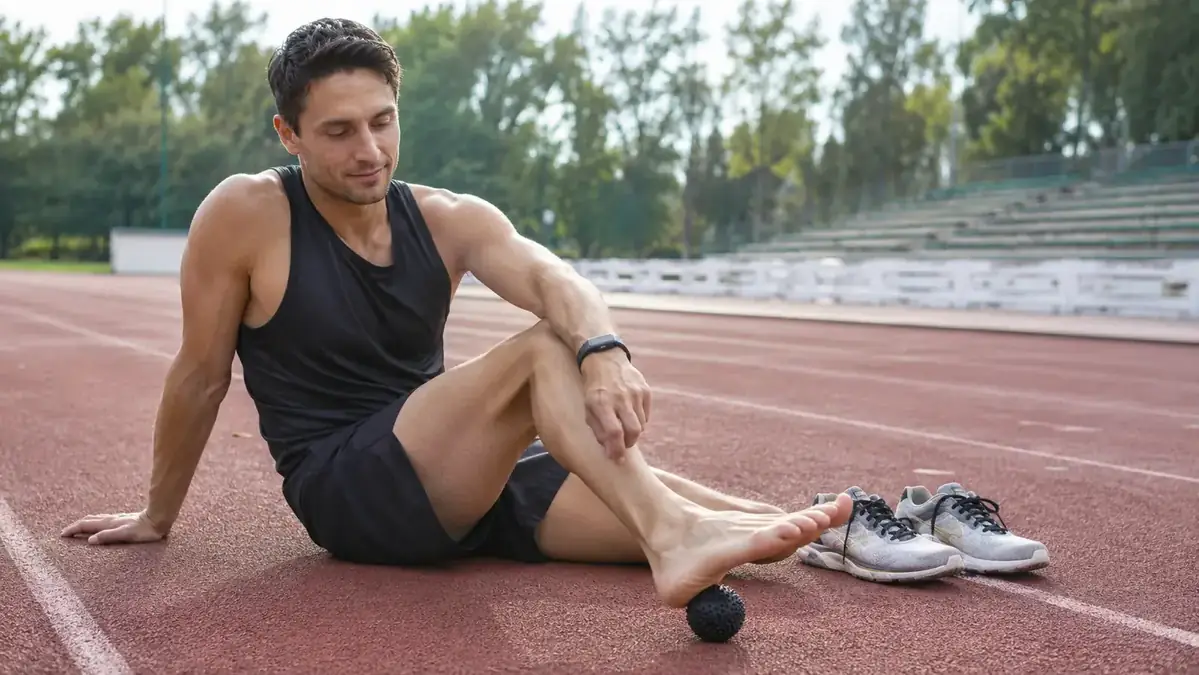
The gastrocnemius and soleus take a beating from running, jumping, and even standing workouts. When calves are chronically tight they restrict ankle dorsiflexion, which shows up as heel rise at the bottom of a squat or achilles tendon discomfort during runs. Sit on the floor, place the ball under one calf, and use the opposite leg or your hands to press down. Work from the base of the calf up to just below the knee. Flex and point your foot while the ball is in place to get the fibers moving.
Forearm Flexors (from grip-heavy training and keyboard use)
Deadlifts, rows, pull-ups, and kettlebell work all hammer the forearm flexors. Add a full workday at a keyboard and these muscles barely get a break. Tight forearms affect grip strength and can create strain patterns up into the elbow, often confused with early tennis or golfer's elbow. Place the ball on a desk or table, rest your forearm on top of it palm-up, and lean in with light pressure while slowly opening and closing your hand. One to two minutes per forearm is enough.
Plantar Fascia (foot arch tension that compounds over time)
The plantar fascia runs along the bottom of the foot from the heel to the toes. Standing workouts, running, and even walking in flat shoes tighten the fascia gradually until that classic first-step-out-of-bed heel pain shows up. Roll the bottom of your foot on a lacrosse ball for two minutes each morning before you take a full step. Stand with most of your weight on the opposite foot and control the pressure. Target the heel, the arch, and the ball of the foot separately. Consistent daily work here prevents a lot of downstream issues. For a full protocol, see our guide on using a lacrosse ball for plantar fasciitis.
What I'd Skip
A few spots I'd avoid pressing a hard ball into directly: the spine itself, the back of the knee, and the front of the shin (over the bone). These areas either have nerves and blood vessels close to the surface or are simply not muscle tissue. If something causes sharp pain rather than a dull ache that releases, back off the pressure or skip that area entirely. A lacrosse ball is a recovery tool, not a treatment. For persistent pain that does not respond to this kind of work in a week or two, see a physical therapist or sports medicine doctor.
Most gym-goers stretch and wonder why they are still sore. The tension is not in the belly of the muscle where stretching reaches. It is in the trigger point, a knotted cluster of fibers that only releases under direct, sustained pressure. A lacrosse ball is the most honest tool I know for getting there.
Ten spots, one tool, under eight dollars.
The Kieba lacrosse ball is durable, the right firmness for real trigger point work, and small enough to take anywhere. If you are only going to add one recovery tool to your bag this year, this is the one I'd reach for first. Rated 4.7 stars by more than 24,000 buyers.
Amazon Check Today's Price on Amazon →