
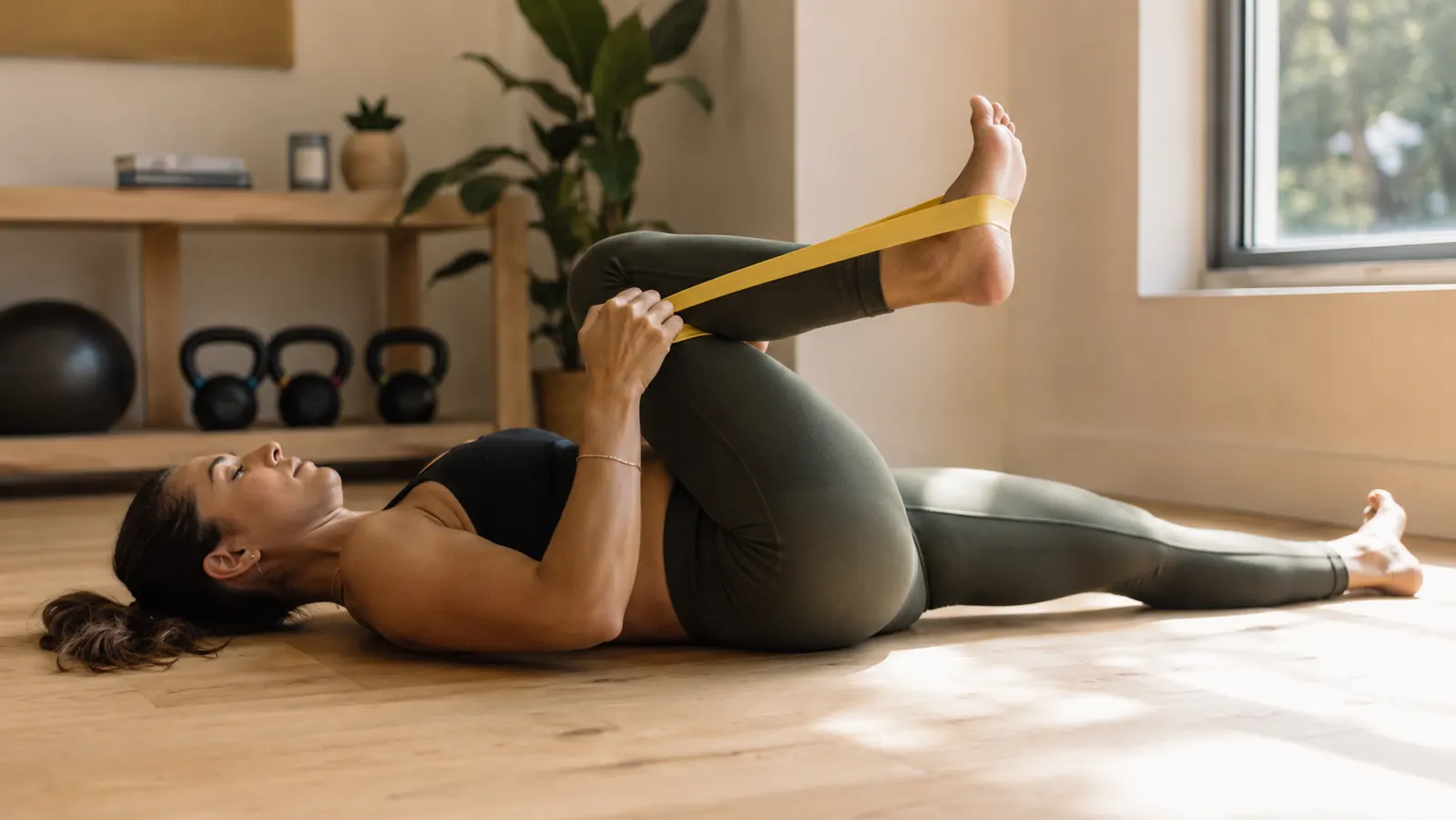
About a year ago I threw a set of Fit Simplify resistance loop bands into my gym bag and mostly forgot about them. I had a drawer full of resistance bands that had snapped, stretched out, or rolled up into useless tubes. I did not expect much. What I did not expect was that twelve months later I would still be reaching for the same five bands every single morning before I do anything else. My hips were a mess after years of desk work stacked on top of heavy squat days. My left shoulder was the kind of tight that made overhead pressing a grind. These bands became the one thing I actually kept doing consistently, partly because they are cheap enough that I did not feel guilty about it, and partly because they worked.
This is a long-term use review, not a first-impression take. I have run the Fit Simplify bands through daily hip mobility circuits, shoulder warm-ups, post-run clamshells, and the kind of shoulder-opening work that desk workers actually need before they touch a barbell. I want to tell you what twelve months of real daily use looks like, not what the box promises.
The Quick Verdict
A genuinely useful set of loop bands for mobility and warm-up work. Durable enough to survive a full year of daily stretching, though the lighter bands show wear first and the carry bag falls apart. Worth every cent at this price point.
Amazon Check Today's Price →Your hips are tight and your warm-ups are getting skipped. A set of five loop bands fixes both problems for less than a cup of coffee.
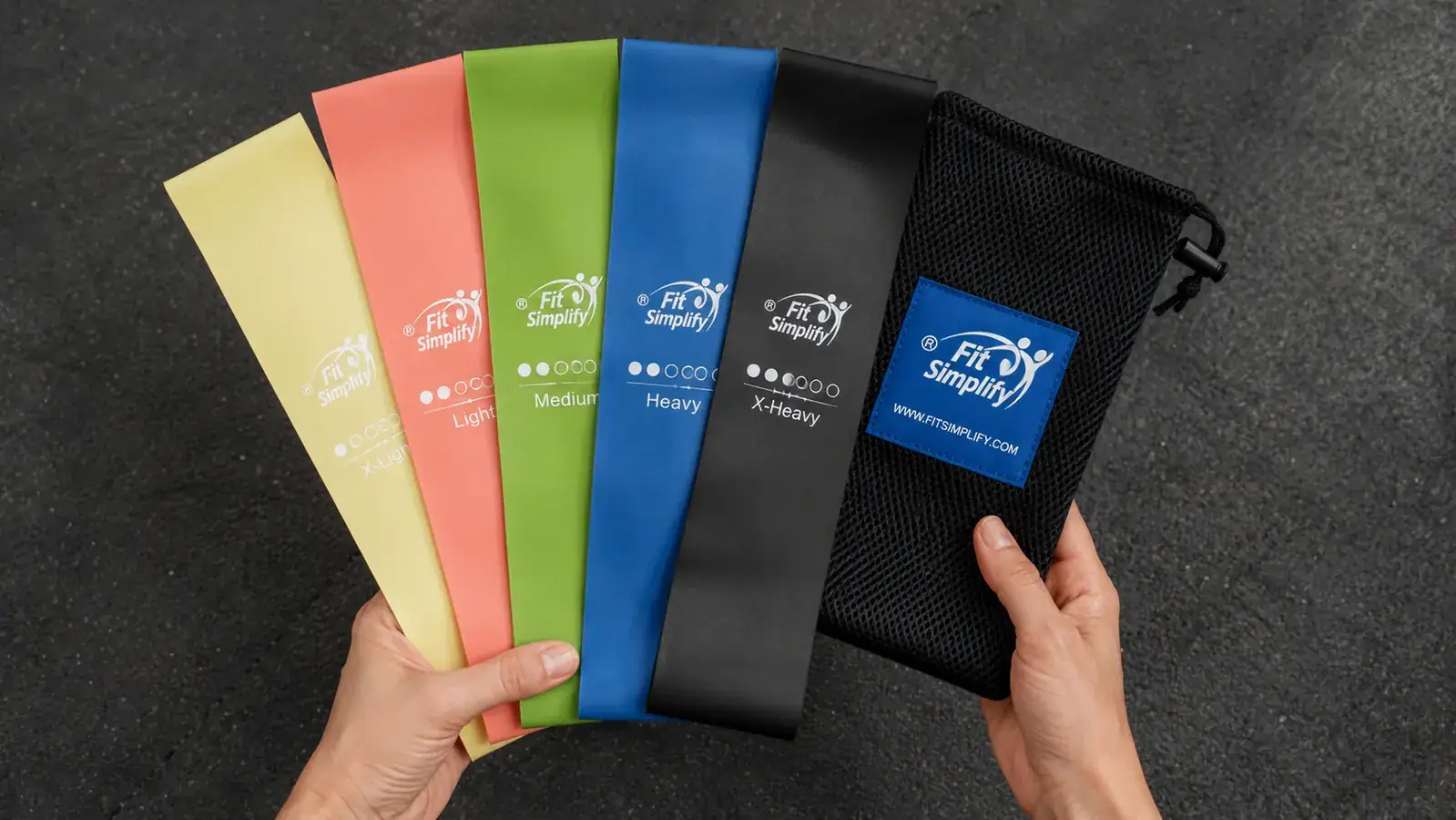
The Fit Simplify set comes with five resistance levels, a carry bag, and an instruction guide. Over 135,000 people have rated it 4.5 stars. Check today's price on Amazon and see if they are on sale.
Amazon Check Today's Price on Amazon →How I Have Used These Bands
My routine has not changed much since month two. Every morning before coffee, I run through about ten minutes of hip work: lateral band walks, clamshells, monster walks, and a kneeling hip flexor opener with the band looped around my thigh. After runs I use the lightest band for standing hamstring pulls and pigeon-assist stretches. Before upper-body sessions at the gym, I use the medium band for shoulder dislocates and pull-apart sets. The bands live on my nightstand so there is no friction to actually doing the work.
I am 41, and I squat twice a week and run three to four times a week. My daily step count is high but my desk hours are also high, which is a brutal combination for hip flexors and thoracic mobility. I started this routine because my physical therapist told me to do banded hip work before I stopped going because I felt better, not because I was fixed. The bands kept me honest.
Over twelve months I went through one full set and started a second. The first set lasted about ten months before the lightest band developed a small tear near the loop seam. The remaining four are still intact and in my second bag. That gives me a real baseline for durability, not just a few weeks of casual testing.
What the Five Resistance Levels Actually Feel Like
The Fit Simplify set comes in five levels: extra light, light, medium, heavy, and extra heavy. In practice, I use three of them regularly. The extra light band is genuinely easy, which makes it useful for shoulder work and for very early-morning hip openers when my body is cold and stiff. The light band covers most of my hip activation drills. The medium band handles the bulk of the resistance work, including banded squats and pull-aparts. The heavy and extra heavy bands mostly stay in the bag unless I am doing specific glute activation work or lateral walks where I want to feel real resistance.
The resistance increments are reasonable but not perfectly linear. The jump from light to medium feels bigger than the jump from medium to heavy. If you are an intermediate to advanced lifter using these for warm-ups, you will probably live in the medium and heavy range. If you are using them purely for mobility and stretching, the extra light and light bands will be your workhorses. That is not a flaw. It is just worth knowing before you assume all five levels will feel equally spaced.
Durability Over Twelve Months
Here is the honest story on durability. The latex holds up well for daily stretching and mobility work. I have not had a band snap in use, which was my biggest fear based on cheaper band sets I had used before. The failures I have seen are slow and visible. The lightest band developed a small surface crack near the seam after about ten months of daily use. I caught it before it snapped and retired it. The others show light surface wear on the inner surface but no structural issues after a year.
Two things do wear out faster than the bands themselves. First, the small carry bag is not built for daily opening and closing. The zipper pull came off mine by month four. I now keep the bands in a small mesh pouch I had from something else. Second, the instruction card gets destroyed fast if it gets any moisture on it. Keep it dry or photograph it on day one. These are minor complaints at this price, but they are worth knowing.
The bands also attract lint and pet hair in a way that requires occasional wiping. A quick wipe with a damp cloth every week or two keeps them clean and keeps the latex from getting tacky. If you skip this, they get grimy and start to feel sticky in a way that affects how they slide over clothing during hip drills.
Ten months in, the lightest band showed a crack near the seam. I retired it. The other four are still in rotation. That kind of durability, at this price, is hard to argue with.
What a Year of Daily Use Did for My Mobility
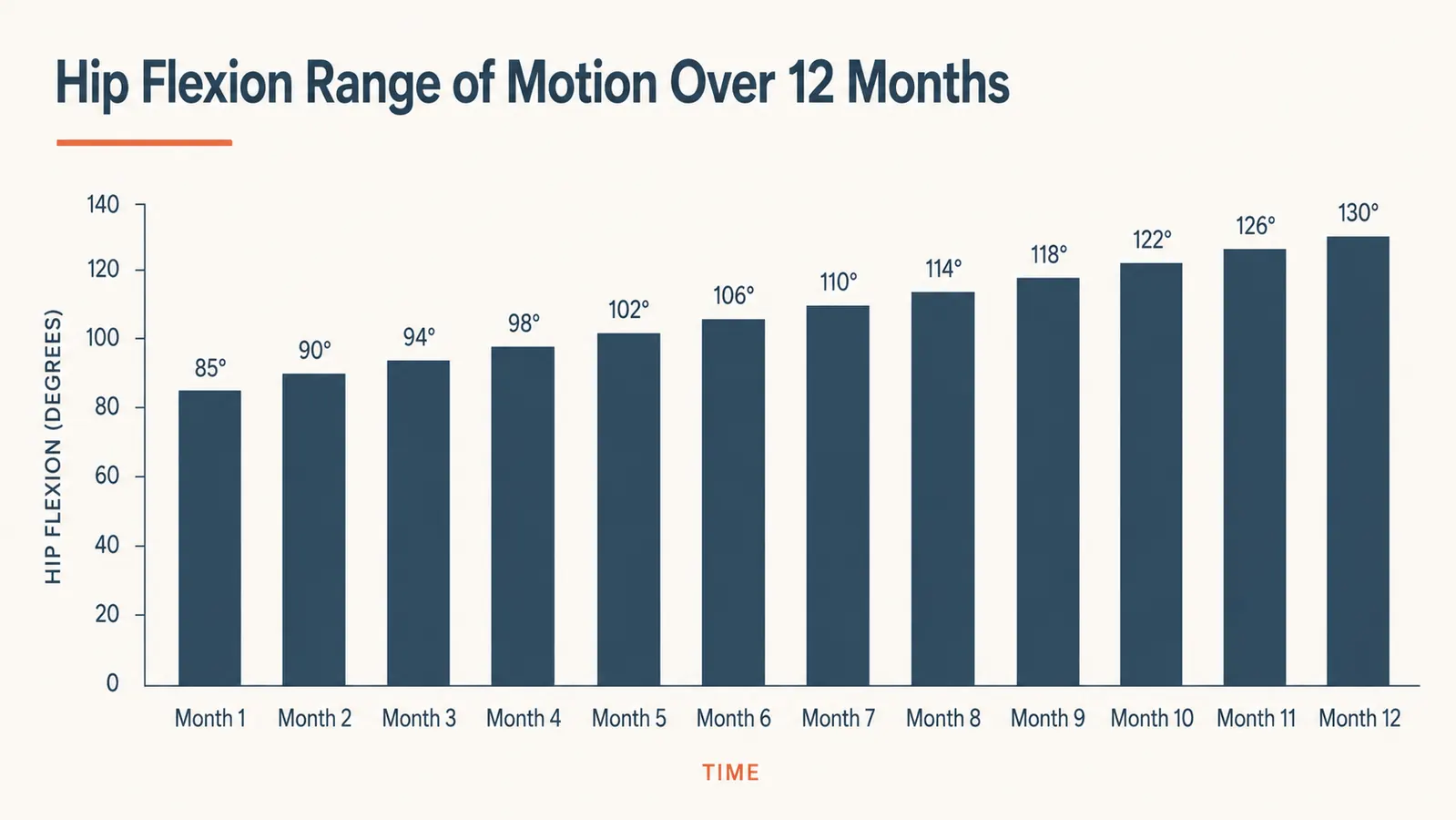
I want to be careful here because I changed other things over the same twelve months: I started sleeping with a pillow between my knees, I reduced my seated screen time by about an hour a day, and I added a weekly yoga class around month four. I cannot credit the resistance bands alone for everything that improved. What I can say is that during the three-week period around month seven when I skipped the band work while traveling, my hip tightness came back noticeably faster than I expected. That told me the bands were doing real work.
The left hip flexor issue that had been nagging me for two years is now a background hum instead of a daily limitation. My squat depth improved by the end of month three and has held since then. My shoulder overhead position is noticeably better, which I attribute mostly to the pull-apart sets I started doing with the light band before every pressing workout. None of this is a clinical outcome. It is a practical athlete's assessment of daily use over time.
Where These Bands Fall Short
Loop bands have real limits and it is worth saying them plainly. They are not a substitute for loaded strength work. If you are trying to build hip strength through full range of motion, banded clamshells are a starting point, not a destination. The resistance caps out well below what a cable machine or hip thrust machine can load. I use them for activation and mobility. For building strength through a full range, I use the cable machine. If you want a direct comparison of when bands win versus when the cable machine wins, I broke that down in my piece on [resistance-bands-vs-cable-machine-for-mobility].
The bands also do not grip the skin well if you try to use them without clothing. Every hip drill I do, I use them over leggings or shorts. Bare skin plus latex plus body weight creates friction in an unpleasant way. Always wear something between the band and your skin.
Finally, these are loop bands, not tube bands with handles. If you are looking for bands to row with, press with, or attach to a door anchor for pull-downs, you need a different product. The Fit Simplify loops are built for wrapping around legs, thighs, and ankles. They are excellent at that specific job. They are not general-purpose resistance tools.
What I Liked
- Survived twelve months of daily use without snapping
- Five levels cover the full range from mobility work to glute activation
- Compact enough to travel with and use anywhere
- Easy to wipe clean, no odor buildup even with daily use
- Price makes it low-risk to try and easy to replace
Where It Falls Short
- Carry bag zipper is flimsy and will likely fail within a few months
- Lighter bands show wear first, typically around the ten-month mark with daily use
- Resistance jumps are not perfectly linear between levels
- Latex attracts lint and needs regular wiping to stay clean
- Not suitable for loaded strength training or door-anchor exercises
Comparing Them to Bands I Have Used Before
Before these I had used three other loop band sets. One was a flat braided fabric set that felt great but rolled up during hip drills and cut into my thighs. One was a thin rubber set from a dollar-store style discount brand that snapped within a month. The third was a thicker latex set from a brand that charged three times the price of the Fit Simplify bands. That expensive set has held up similarly, which tells me the price gap is more about brand than about material quality.
The Fit Simplify bands sit in the sweet spot for people who want a reliable daily-use tool without paying a premium for a brand name. They are not indestructible, but they are durable enough for consistent mobility work over a year, which is more than most people will demand from them.

Who This Is For
These bands are a good fit for gym-goers who want to warm up their hips and shoulders properly before lifting, runners who need post-run hip and hamstring work, desk workers with tight hip flexors who want a simple daily routine, and anyone in physical therapy doing banded activation drills at home. They are also a solid choice if you are building out a home gym on a tight budget and want a versatile tool that handles the mobility side of training. If you are looking for ten specific stretches to pair with these bands, I put together a list of the most effective ones in my guide on [10-resistance-band-stretches-for-post-workout-recovery].
Who Should Skip It
Skip these if you need heavy resistance for loaded strength training. They max out around light-to-moderate loading, which is fine for warm-ups and mobility but not enough for progressive overload work. Skip them if you need tube-style bands with handles for pressing or rowing movements. And skip them if you are hard on gear and expect a budget product to last indefinitely. A year out of one set with daily use is genuinely impressive for the price, but they are not lifetime products.
If you are skipping warm-ups because they feel like a hassle, a set of loop bands on your nightstand will change that.
The Fit Simplify Resistance Loop Bands come in five resistance levels with a carry bag and instruction guide. They are the most-reviewed loop band set on Amazon for a reason. Check today's price below.
Amazon Check Today's Price on Amazon →