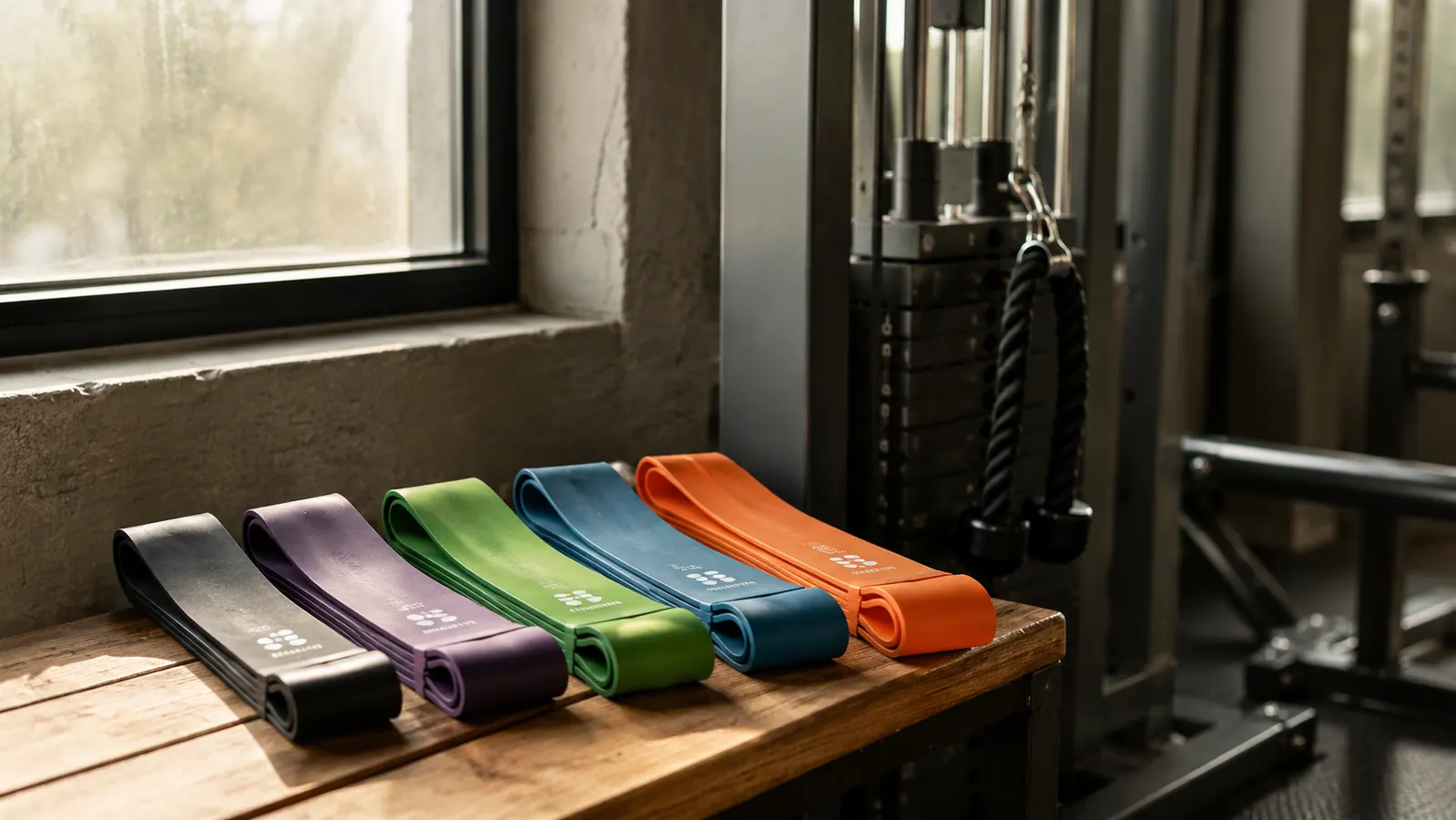
If you train regularly, you have probably stood in the gym wondering the same thing I have: should you grab a band from the rack for your hip opener, or hook an ankle cuff into the cable machine and work from there? Both tools create resistance through a range of motion. Both show up in mobility routines across every gym on the planet. But they are not interchangeable, and choosing the wrong one for your goal can leave you feeling like you did nothing at all.
The short answer: for most people doing mobility and recovery work outside the gym, resistance bands win by a wide margin. They are cheaper, more versatile, easier to set up at home or in a hotel room, and they cover 90 percent of what a cable machine does for joint mobilization. The cable machine has real advantages when you need finely graded load increments or when you are rehabbing under supervision and need consistent, measurable resistance. But for everyday recovery stretching, the Fit Simplify Resistance Loop Bands are the tool I reach for every single day.
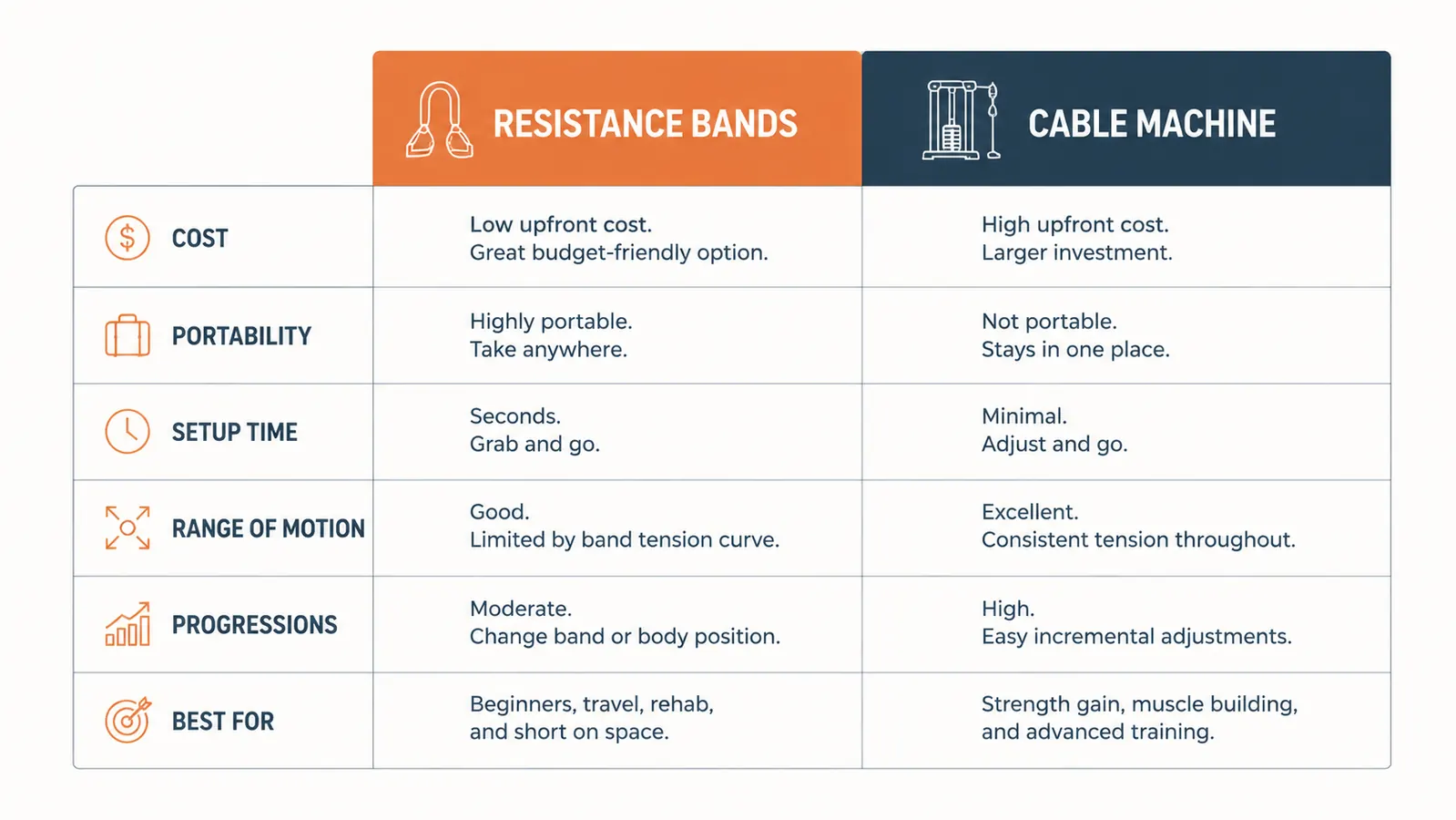
| Resistance Bands | Cable Machine for Mobility | |
|---|---|---|
| Cost | Budget-friendly for a set of five | Mid-range to premium (gym access or home purchase) |
| Portability | Fits in a jacket pocket, travel-ready | Fixed to the floor, gym-only |
| Setup Time | Under 30 seconds, no adjustment needed | 2 to 5 minutes (weight stack, cable route, attachment) |
| Resistance Levels | Five color-coded bands from 2 to 25 lbs | Typically 10 to 200 lbs in 5 lb or 10 lb increments |
| Range of Motion | Full 360-degree movement, band moves with you | Limited to cable angle and pulley position |
| Load Consistency | Elastic; resistance increases at end range | Isotonic; consistent load through full movement |
| Best For | Home recovery, warm-ups, hip and shoulder mobility | Structured rehab, graded loading, gym-based strength-mobility work |
| Instruction Included | Yes, printed guide and carry bag included | No standard guide; exercise selection is self-directed |
Where Resistance Bands Win
The biggest advantage bands have is that they go where you go. I used my Fit Simplify set during a travel week last month and ran through a full hip and thoracic routine in a hotel room in about 12 minutes. No gym required, no equipment hunt, no waiting for a cable station. That accessibility alone changes how consistently you actually do your mobility work, and consistency is the whole game with joint health.
The range of motion argument is real too. When you use a cable machine for a hip flexor stretch, the cable is attached at a fixed point, and the pulley angle constrains where the load travels. With a loop band anchored to a door frame or looped around a pole, the pull direction shifts as you move through the stretch, which means the band accommodates your body's arc rather than fighting it. For hip 90/90s, banded shoulder distraction, and ankle dorsiflexion work, the band's flexibility (literally and figuratively) is genuinely useful. The Fit Simplify set includes five resistance levels, so you can start gentle on a tight morning and load up as you warm through.
There is also the cost reality. The Fit Simplify Resistance Loop Bands are budget-friendly and come with a printed instruction guide and a carry bag. You are not going to spend that little on a cable machine attachment, let alone the machine itself. For anyone building a home recovery setup or supplementing what they do at the gym, bands give you the most usable mobility work per dollar of any tool I know.
Your hips are not going to stretch themselves. The Fit Simplify set is budget-friendly and ships tomorrow.
Five resistance levels, a printed instruction guide, and a carry bag. It is what I keep in my gym bag year-round, and at this price there is no reason not to have a set at home too.
Amazon Check Today's Price on Amazon →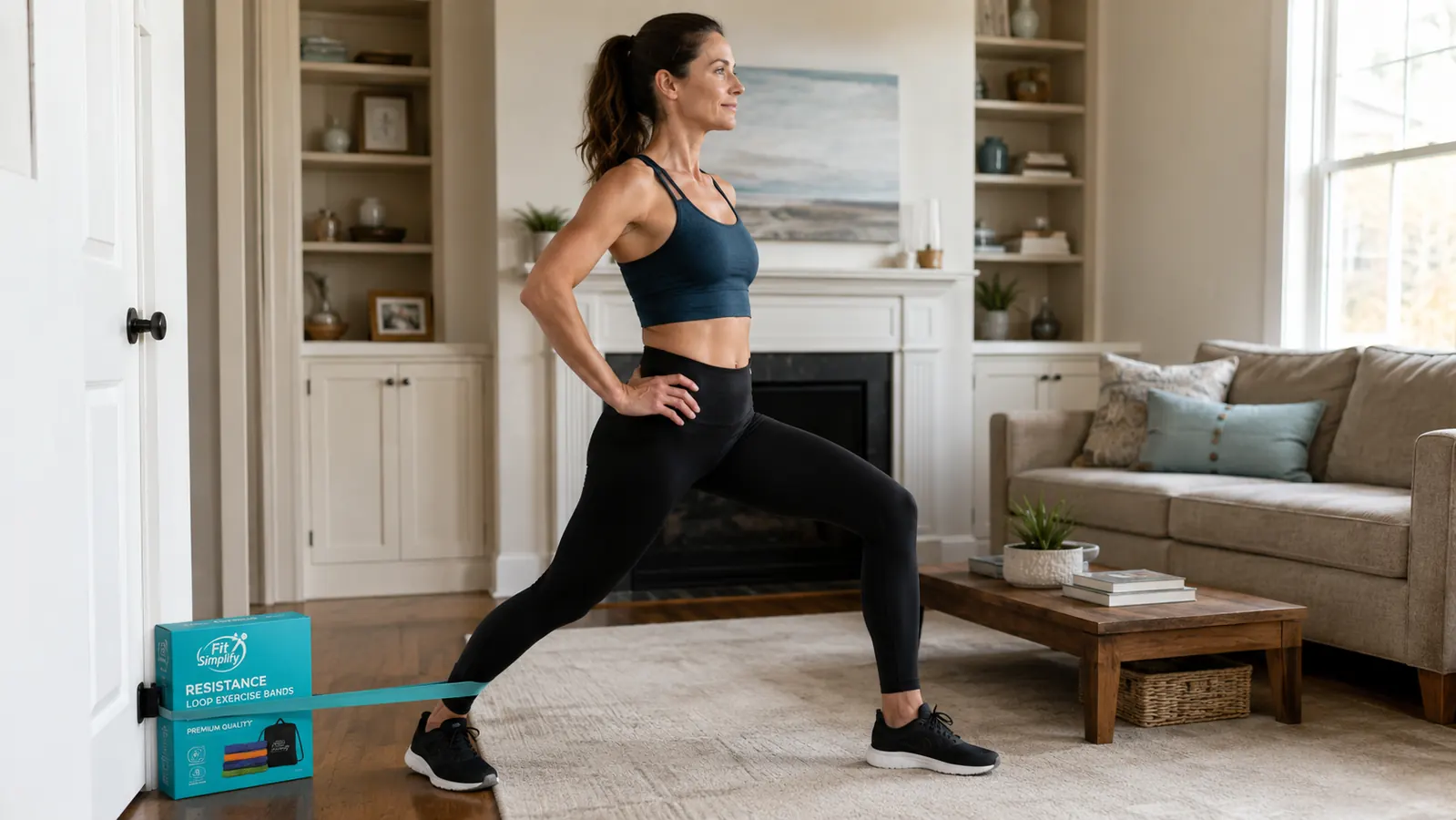
Where the Cable Machine Wins
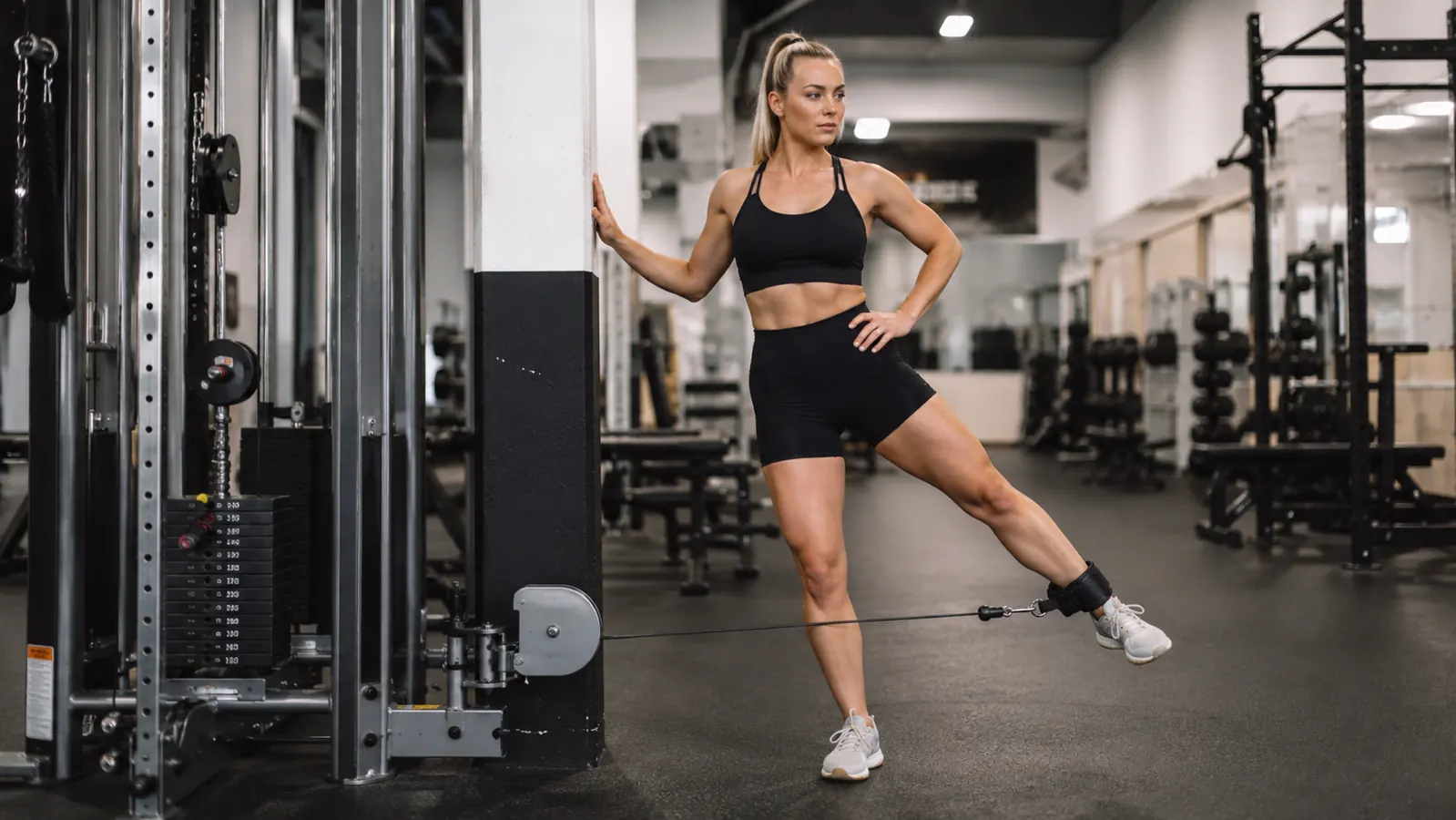
Cable machines earn their place when load consistency matters more than freedom of movement. If you are working through a hip labrum issue with a physio and they want you doing cable-resisted hip abductions at exactly 12 lbs for three sets of 15, a band is not going to give you that precision. The stack-and-pin setup on a cable machine means you can dial in the same load session over session, which is exactly what graded rehab protocols need.
The cable machine also wins on maximum load. The heaviest Fit Simplify band sits around 25 lbs of resistance at full stretch, and even combining bands only gets you so far. If you are doing cable pull-throughs for hip hinge mobility combined with glute activation, or loaded carries for thoracic extension, you need a weight stack. For that kind of strength-mobility hybrid work, the cable machine is irreplaceable. But be honest with yourself: how often does your mobility and recovery work actually require more than 25 lbs of resistance? For most people doing warm-ups, cooldowns, and recovery days, the answer is almost never.
The cable machine is better when you need a precise load that does not change. Bands are better when you need to actually do the work, which means any day, anywhere, no excuses.
The Elastic Load Difference: What It Means for Recovery Stretching
One thing worth understanding before you pick a tool is how elastic loading works differently from the constant load of a cable machine. When you use a resistance band, the tension increases as you stretch the band further. At the start of a hip flexor stretch the pull is light; at end range it is heavier. This is called accommodating resistance, and for mobility work it has a practical benefit: the band challenges you most where you are most capable of handling load, which is at the end of your current range. That end-range loading is exactly where joint mobility adaptations happen.
A cable machine gives you the same resistance throughout. That is more like what your joints experience during real-world strength movements, which is why cable work is valuable in a rehab context. But for pure mobility and recovery stretching, the band's elastic nature matches the task well. Your body produces more force at end range naturally, and the band matches that by asking more of you there. It is a small mechanical detail that most people never think about, but it is one reason bands feel productive even at low loads.
Practical Side-by-Side: Three Common Mobility Drills
Hip flexor distraction stretch: both tools work here, but the band is more practical. You loop it around a rack or door anchor, step in, and move into the stretch while the band pulls the hip forward into the socket. On a cable machine you need an ankle cuff, a low pulley, and enough floor space to step back far enough for the stretch to actually work. The band version takes 20 seconds to set up; the cable version takes two minutes and depends on the station being free.
Shoulder distraction: this one genuinely favors the band. You anchor the band at shoulder height, grip it, and move your torso away while the band decompresses the shoulder joint. Replicating this on a cable machine is awkward because the cable does not wrap around your wrist in a way that allows the same passive hanging position. Bands win here.
Standing hip abduction for IT band and glute medius work: this is where the cable machine earns points. The consistent tension through the full arc makes it easier to feel the glute medius firing, and you can progress the load week over week in a structured way. If you have access to a cable machine and this is a weak point in your training, use it. If you are at home, the lightest Fit Simplify band around your ankle does the job reasonably well, just without the same progression control.
Who Should Buy Which
Get the Fit Simplify Resistance Loop Bands if you do most of your mobility and recovery work outside the gym, at home, during travel, or as a warm-up before you even get to the equipment. They are also the right call if you are budget-conscious, if you are new to mobility work and want a low-barrier starting point, or if you want a tool you can use daily without driving to a gym. With 135,000 reviews and a 4.5-star rating, they are not a gamble. They are proven. Read the full review at the link below if you want a deeper breakdown of the five resistance levels and how long the latex holds up.
Lean on the cable machine if you are working with a physical therapist on a specific injury protocol, if you need more than 25 lbs of resistance for your mobility work, or if you are already in a commercial gym and the station is free. The cable machine is not going away from your training toolkit; it just does not need to be your primary mobility tool when a budget band covers most of the same ground with less friction.
If you are somewhere in the middle, the real answer is: own the bands, use the cable machine when it makes sense. They are not rivals. But if you can only choose one thing to buy today for recovery stretching, the Fit Simplify set is the clearer choice on every practical dimension.
Affordable, five resistance levels, ships in a carry bag. This is the one I recommend to every athlete who asks.
The Fit Simplify Resistance Loop Bands have over 135,000 Amazon reviews and a 4.5-star rating. If you have been putting off adding a band to your recovery toolkit, today is a reasonable day to fix that.
Amazon Check Today's Price on Amazon →